
Search
Remove Ads
Advertisement
Search Results

Article
The Egyptian Amulet: Pious Symbols of Spiritual Life
Material Objects & Cultures Material objects convey volumes about the people who possessed them. Cultures and societies in every generation are in part classified - either correctly or incorrectly...
Article
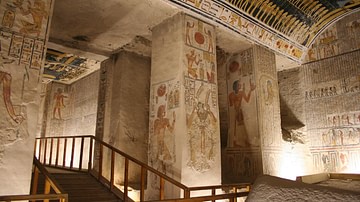
Tomb Robbing in Ancient Egypt
The tombs of the great kings and nobles of Egypt were built to safeguard the corpse and possessions of the deceased for eternity and yet, while many have endured for thousands of years, their contents often disappeared...

Article
Mummification in Ancient Egypt
The practice of mummifying the dead began in ancient Egypt c. 3500 BCE. The English word mummy comes from the Latin mumia which is derived from the Persian mum meaning 'wax' and refers to an embalmed corpse which was...

Definition
Ajax (Play)
Ajax is a play written by the 5th-century BCE Greek poet and dramatist Sophocles. Although Sophocles wrote at least 120 plays, only seven have survived. Of his surviving plays, the best-known is Oedipus Rex (Oedipus the King) - part...
Definition
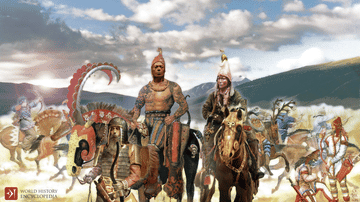
Scythians
The Scythians were a nomadic people whose culture flourished between the 7th and 3rd century BCE in a territory ranging from Thrace in the west, across the steppe of Central Asia, to the Altai Mountains of Mongolia in the east. This...

Definition
Ancient Scotland
Scotland is a country which, today, comprises the northern part of Great Britain and includes the islands known as the Hebrides and the Orkneys. The name derives from the Roman word "Scotti" which designated an Irish tribe who...

Definition
Valkyrie
A Valkyrie is a figure in Norse mythology depicted as a warrior woman on horseback, a wolf or boar, and armed with a spear, who decides the fate of warriors in battle and carries the dead to Odin’s Valhalla. Valkyrie means "chooser...
Definition
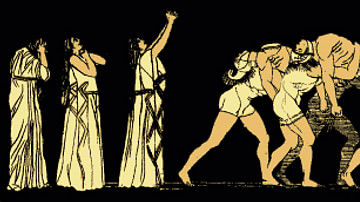
Suppliants by Euripides
The Suppliants (also given as Suppliant Women) is a Greek tragedy written by Euripides, not to be confused with Aeschylus' tragedy of the same title. Its exact date of production is not known, possibly around 424 to 420...

Definition
Scythian Art
Scythian art is best known for its 'animal art.' Flourishing between the 7th and 3rd centuries BCE on the steppe of Central Asia, with echoes of Celtic influence, the Scythians were known for their works in gold. Moreover, with the...

Definition
Anubis
Anubis (also known as Inpu, Inpw, Anpu) is the Egyptian god of mummification, funerary rites, guardian of tombs, and guide to the afterlife as well as the patron god of lost souls and the helpless. He is one of the oldest gods of Egypt...
