
Search
Remove Ads
Advertisement
Search Results
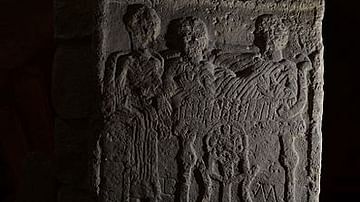
Image
Stele with Epitaph from Roman Dacia (Romania)
A Roman stele with an epitaph from the ancient town of Potaissa in Dacia (present-day Turda, Romania). It was made between c.151-270 CE. Height: 205 cm (80.7 in) Width: 77 cm (30.3 in) Depth: 17 cm...
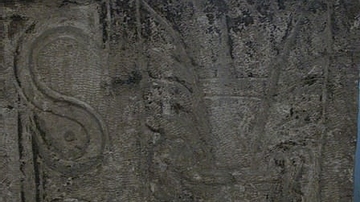
Image
Roman Epigraphic Stone from Hungary
A Roman epigraphic stone found in the ancient town of Brigetio, which was located in the Roman province of Pannonia superior. (This is present-day Komárom, Hungary.) Transcription: D(is) M(anibus) / C(aio...

Article
Daily Life in Ancient Egypt
The popular view of life in ancient Egypt is often that it was a death-obsessed culture in which powerful pharaohs forced the people to labor at constructing pyramids and temples and, at an unspecified time, enslaved...

Article
Ancient Mesopotamian Beliefs in the Afterlife
Unlike the rich corpus of ancient Egyptian funerary texts, no such “guidebooks” from Mesopotamia detail the afterlife and the soul's fate after death. Instead, ancient Mesopotamian views of the afterlife...

Article
Scythian Territorial Expanse
With 7600 perimeter miles (12,231 km), the Scythians roamed and ruled over an astonishing 1.5 million mi² (2.4 million km²) of territory between the 7th and 3rd centuries BCE. Although building an empire was never in...
Article
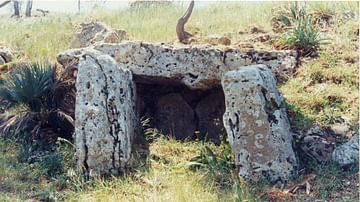
The Dolmens of Sicily
It is a well-known fact that Sicily, the largest island in the Mediterranean sea, went through a quite complex prehistoric period. So much so that it is difficult to navigate through the muddle of people that have followed...

Article
The Megalithic Funerary Art of San Agustín
Beginning approximately 2000 years ago, in a rugged stretch of southwestern Colombia where the Andes split into multiple ranges and the mighty Magdalena River is born, a people created a collection of magnificent...

Article
The Man Who Wrestled with a Ghost
The Man Who Wrestled with a Ghost (also given as The Indian Who Wrestled with a Ghost) is a Teton Sioux tale on how one should interact with the spirits of the dead in circumstances where one cannot avoid them. It...
Article
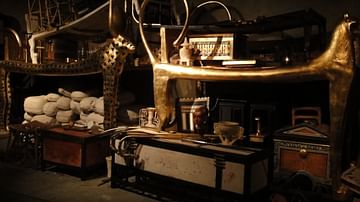
Grave Goods in Ancient Egypt
The concept of the afterlife changed in different eras of Egypt's very long history, but for the most part, it was imagined as a paradise where one lived eternally. To the Egyptians, their country was the most perfect...

Article
Death's Mansions: The Columbaria of Imperial Rome
A columbarium is an underground chamber, which the Romans used for preserving the ashes of the dead. During the 1st and 2nd centuries CE, hundreds of columbaria lined the consular highways leading out...
