
Search
Remove Ads
Advertisement
Search Results

Definition
Kalhu / Nimrud
Kalhu (also known as Caleh, Calah, and Nimrud, in modern-day northern Iraq) was a city in ancient Mesopotamia that became the capital of the Assyrian Empire under Ashurnasirpal II (r. 884-859 BCE) who moved the central government...

Definition
Assyrian Warfare
Assyria began as a small trading community centered at the ancient city of Ashur and grew to become the greatest empire in the ancient world prior to the conquests of Alexander the Great and, after him, the Roman Empire. While...
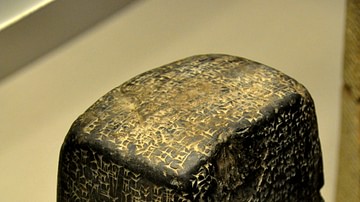
Image
Stone Foundation Document of King Adad-Nirari I
Rectangular stone foundation document of the Assyrian king Adad-Nirari I. It recounts the king's victories over the Mitanni, who had failed to gain Hittite support, and the extension of Assyrian rule...
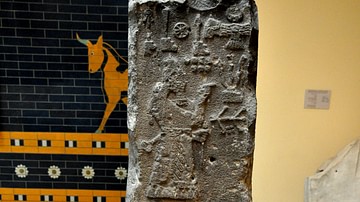
Image
Stela of the Assyrian King Adad Nirari III
Stela of Adad Nirari III, erected by one of the king's local governors, Nergal-Eres, found in Saba, Neo-Assyrian Empire, 810-783 BCE. The stela features the Assyrian King Adad Nirari III praying in front...
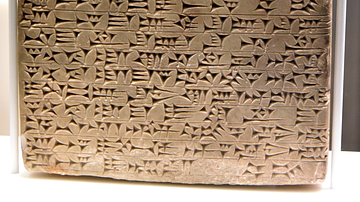
Image
Foundation Inscription of Adad-nirari I
During the renovation work of the temple of Ishtar, the Assyrian king Tukulti-Ninurta I (r. 1243–1207 BCE) found a stone tablet among the foundations with an inscription by his grandfather Adad-nirari I (1295–1264...
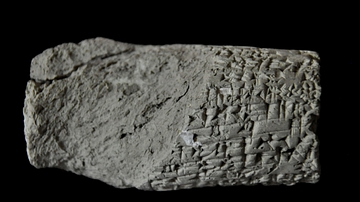
Image
Tablet of King Nur-Adad
This partially broken document mentions the name of King Nur-Adad, king of Larsa, 1921-1905 BCE. (The Sulaimaniya Museum, Iraq).

Image
A door socket from Anu-Adad Temple
The cuneiform inscriptions on this door socket mention the name of Shalmaneser III, King of Assyria (858-824 BCE). The king dedicated the stone to the gods Anu and Adad for his life and the well-being of his people...
Image
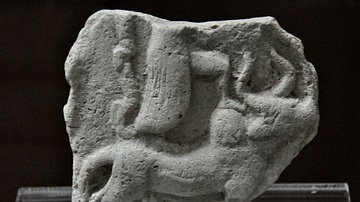
God Adad
In this partially survived terracotta plaque, the god Adad stands on the back of a bull. Adad was the God of weather, hurricanes, storms, thunder, and rain. From Mesopotamia, modern-day Iraq. Old-Babylonian period, 2000-1500 BCE. The...

Definition
Assur - The Supreme God of the Ancient Assyrians
Assur (also Ashur, Anshar) is the god of the ancient Assyrians who was elevated from a local deity of the city of Ashur to the supreme god of the Assyrian pantheon. His attributes were drawn from earlier...
Image
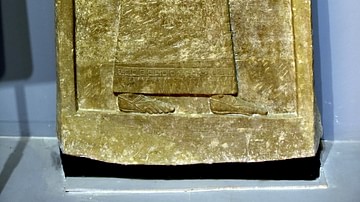
Stele of Adad-Nirari III
Limestone stele of the Assyrian king Adad-Nirari III (r. 810-783 BCE) from Tell al-Rimah, in modern-day Nineveh Governorate, Iraq. The king is praying before gods and goddesses symbols. The cuneiform inscriptions mention...
