
Search
Remove Ads
Advertisement
Search Results

Definition
Magi
The Magi are the visitors who came to Bethlehem to worship the newly-born Jesus of Nazareth in the gospel of Matthew (2:1-2). 'Magi' is a transliteration of the Greek magos from old Persian magus ("powerful") as a reference to the Zoroastrian...

Definition
Shapur II
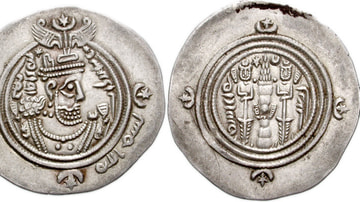
Shapur II (r. 309-379 CE, also Sapur II) was the tenth monarch of the Sassanian Empire (224-651 CE) and among the most successful. Under his reign – which lasted his entire life – the Avesta (Zoroastrian scripture) was committed to...
Definition
Rashidun Government
The Rashidun Caliphate (632-661 CE) was responsible for setting up the basis of the Islamic empire and expanding its borders beyond the Arabian soil. These leaders were selected by the consent of the people and based on their...

Definition
Fertile Crescent - A Modern Term For An Ancient Region
The Fertile Crescent, often called the 'cradle of civilization', is the region in the Middle East that curves like a quarter-moon shape from the Persian Gulf through modern-day southern Iraq, Syria...

Image
The AlUla World Archaeology Summit
The AlUla World Archaeology Summit, photograph by the Royal Commission for AlUla, Saudi Arabia.
Attendees at the AlUla World Archaeology Summit, held at AlUla, Saudi Arabia, October 2024.

Image
Hegra Tomb
Nabataean tomb at Hegra, photograph by the Royal Commission of AlUla, Saudi Arabia. A Nabataean tomb at the magnificent site of Hegra, AlUla, Saudi Arabia. Hegra was a massive site settled during the Nabatean and Roman times. A UNESCO...

Image
Qasr al-Bint Necropolis in Hegra
The Qasr al-Bint necropolis in Hegra (Mada'in Salih) in modern-day Saudi Arabia is one of the four necropolis areas to have survived. Qasr al-Bint consists of 31 Nabatean tombs dating from 1 to 58 CE. The tombs include...

Image
Ruins of Qurh
Ruins of Qurh, photograph by Royal Commission of AlUla, Saudi Arabia. Remains of the Islamic city of Qurh in the AlUla area of Saudi Arabia. This settlement was mentioned in early Islamic sources, a testemant to its ancient origins...

Article
Wine Culture in the Hellenistic Mediterranean
The culture of drinking wine was enjoyed throughout the Mediterranean world, and what is true now was true in antiquity, too: wine is always good business. The Hellenistic Period (c. 335-30 BCE), between...

Image
The Arabian Commission in Paris
A 1919 photograph of the Arabian Commission to the Paris Peace Conference at Versailles which decided peace terms after the First World War (1914-18). Standing in the foreground is Emir Faisal while to the rear and...
