
Search
Remove Ads
Advertisement
Search Results

Definition
Cilicia
Cilicia is the ancient Roman name for the southeastern region of Asia Minor (modern-day Turkey). It is referenced in the biblical books of Acts and Galatians, was the birthplace of Saint Paul, and the site of his early evangelical missions...

Definition
Vulcan
Vulcan or Volcanus was the Roman god of fire and forge, the equivalent of Hephaestus from Greek mythology. The son of Jupiter and Juno, he was the special patron of blacksmiths and artisans. As the god of the forge and the devastating...

Definition
The Saxons
The Saxons were a Germanic people of the region north of the Elbe River stretching from Holstein (in modern-day Germany) to the North Sea. The Saxons who migrated to Britain in the 5th and 6th centuries CE along with the Angles, Frisians...

Definition
Trajan
Trajan, or Marcus Ulpius Traianus, was Roman emperor from 98 to 117 CE. Known as a benevolent ruler, his reign was noted for public projects which benefitted the populace such as improving the dilapidated road system, constructing aqueducts...
Definition
Antonine Wall
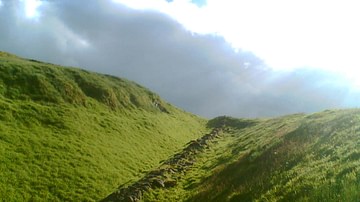
The Antonine Wall was the north-west frontier of the Roman Empire. Located in central Scotland, north of Edinburgh and Glasgow, the Wall was a linear barrier that stretched from the Firth of Forth near Bo'ness to the Clyde estuary...

Definition
Carthaginian Naval Warfare
The Carthaginians were famed in antiquity for their seafaring skills and innovation in ship design. The empire their navy protected stretched from Sicily to the Atlantic coast of Africa. Able to match the tyrants of Sicily...

Definition
Masada
Masada (“fortress” in Hebrew) is a mountain complex in Israel in the Judean desert that overlooks the Dead Sea. It is famous for the last stand of the Zealots (and Sicarii) in the Jewish Revolt against Rome (66-73 CE). Masada is a UNESCO...

Video
The Ancient Romans at War - Warfare and Strategy
Roman Warfare was remarkably successful over many centuries and across many territories. This was due to several important factors. Italy was a peninsula not easily attacked, there was a huge pool of...

Article
Legions of the Rhine Frontier
After Julius Caesar’s (100-44 BCE) conquest of Gaul, Roman legions pushed the borders of the Roman Empire’s frontier to the banks of the Rhine River. Augustus (r. 27 BCE - 14 CE) divided the newly acquired region into...

Article
Legions of the Parthian Wars
Parthia had always been a thorn in the side of the Roman Empire. The initial campaigns by Crassus and Mark Antony were total failures, and although Trajan and Syrian governor Cassius made some progress in the 2nd century...
