
Search
Remove Ads
Advertisement
Search Results

Definition
Maya Government
Ancient Maya government was formed on the basis that rulers were thought to have been god-like, which to some might suggest one unified state. However, the consensus amongst anthropologists supports that each major Maya city remained...

Definition
Inca Government
The centre of Inca power was the capital Cuzco, considered the navel of the world. 40,000 Incas governed an empire of over 10 million subjects who spoke over 30 different languages. Consequently, the centralised government employed...

Definition
Jomon Period
The Jomon Period is the earliest historical era of Japanese history which began around 14500 BCE, coinciding with the Neolithic Period in Europe and Asia, and ended around 300 BCE when the Yayoi Period began. The name Jomon, meaning...

Definition
Inca Warfare
The warfare of the Inca civilization was characterised by a high degree of mobility, large-scale engagements of hand-to-hand combat, and the establishment of a network of fortresses to protect an empire of over 10 million subjects...

Definition
Woolly Mammoth
The woolly mammoth, Mammuthus primigenius, is an extinct herbivore related to elephants who trudged across the steppe-tundras of Eurasia and North America from around 300,000 years ago until their numbers seriously dropped from...
Definition
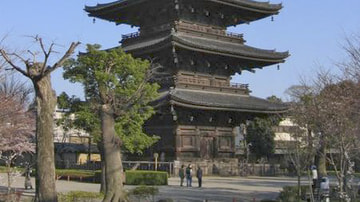
Heiankyo
Heiankyo (Kyoto), located in the centre of Honshu island, was the capital of Japan for over a thousand years and gave its name to one of the golden ages of Japanese history, the Heian Period (794-1185 CE). Built according to Chinese...
Definition
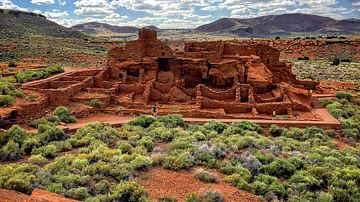
Wupatki
Wupatki or Wupatki National Monument is an Ancestral Puebloan site that contains over 800 ancient ruins. It is situated in the north-central region of the US state of Arizona and is approximately 50 km (31 miles) northeast of the present-day...

Definition
Manorialism
Medieval European Manorialism (Manorial System) was the system where rural society was arranged around a manor house or castle on an estate. The smallest units of these estates were called manors. Free and unfree labourers here worked...

Definition
Stone Age
From the dawn of our species to the present day, stone-made artefacts are the dominant form of material remains that have survived to today concerning human technology. The term “Stone Age” was coined in the late 19th century CE by...

Definition
Ilkhanate
The Ilkhanate (or Ilqanate, 1260-1335 CE) was that part of the Mongol Empire (1206-1368 CE) which mostly covered what is today Iran and parts of Turkmenistan, Turkey, Iraq, Armenia, Afghanistan, and Pakistan. Established by the Mongol...
