
Search
Remove Ads
Advertisement
Search Results

Article
Trade Unions in the British Industrial Revolution
Trade unions were formed in Britain during the Industrial Revolution (1760-1840) to protect workers from unnecessary risks using dangerous machines, unhealthy working conditions, and excessive hours...

Article
Eyes on the East: Chronicles of the Indian Ocean Spice Trade
As the 15th century ended, Europeans were still mostly in the dark about the Eastern world. Early travelers like Marco Polo had given the West tidbits of information, but these accounts were...
Article
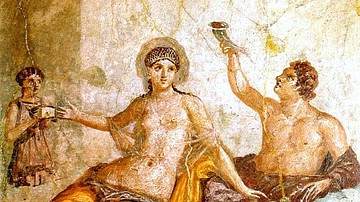
The Eastern Trade Network of Ancient Rome
The life of wealthy Romans was filled with exotic luxuries such as cinnamon, myrrh, pepper, or silk acquired through long-distance international trade. Goods from the Far East arrived in Rome through two corridors...

Article
The Phoenicians - Master Mariners
Driven by their desire for trade and the acquisition of such commodities as silver from Spain, gold from Africa, and tin from the Scilly Isles, the Phoenicians sailed far and wide, even beyond the Mediterranean's...

Article
Trade in the Byzantine Empire
Trade and commerce were essential components of the success and expansion of the Byzantine Empire. Trade was carried out by ship over vast distances, although for safety, most sailing vessels were restricted to the...
Article
Etruscan Trade
The Etruscan civilization flourished in central Italy between the 8th and 3rd century BCE, and their prosperity was largely based on their exploitation of local mineral resources, both through manufactured goods and trade. The...

Article
The Gold Trade of Ancient & Medieval West Africa
West Africa was one of the world's greatest producers of gold in the Middle Ages. Trade in the metal went back to antiquity but when the camel caravans of the Sahara linked North Africa to the savannah...

Image
Map of the Trade Networks of the Ancient Mediterranean World - Connectivity & Expansion in the Archaic and Classical Ages
Between the 7th and 4th centuries BCE, the Mediterranean functioned as a highly interconnected zone of maritime exchange, shaped by the expanding...

Definition
Carthage
Carthage was a Phoenician city-state on the coast of North Africa (the site of modern-day Tunis) which, prior the conflict with Rome known as the Punic Wars (264-146 BCE), was the largest, most affluent, and powerful political entity...

Collection
Trade in the Ancient World
Trade has been going on for as long as humans have needed or wanted something that others had and they did not. Bartering for goods and trade in kind developed into more sophisticated forms of exchanges using commonly...
