
Search
Remove Ads
Advertisement
Search Results

Image
Map of the Phoenician Trade and Colonization, c.1100-600 BCE - Trade, Colonies & Maritime Networks Across the Mediterranean
Between c. 1100 and 600 BCE, the Phoenician city-states of the Levant, especially Tyre, Sidon, Byblos, and Arwad, developed one of the ancient...

Article
Trade in Ancient Egypt
Trade has always been a vital aspect of any civilization whether at the local or international level. However many goods one has, whether as an individual, a community, or a country, there will always be something one lacks...
Article
Middle Eastern Power Shifts & the Trade of Pepper from East to West
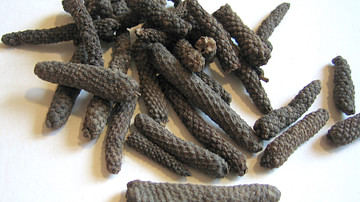
Pepper has long been the king of spices and for almost 2,000 years dominated world trade. Originating in India, it was known in Greece by the 4th century BCE and was an integral part of...

Definition
Phoenicia
Phoenicia was an ancient civilization composed of independent city-states located along the coast of the Mediterranean Sea stretching through what is now Syria, Lebanon and northern Israel. The Phoenicians were a great maritime people...

Definition
Transatlantic Slave Trade - The Shame of Nations
The transatlantic slave trade (also given as the Atlantic slave trade, circa 1492 to 1860) was the practice of enslaving the citizens of African states and transporting them across the Atlantic Ocean to...

Article
Global Trade in the 13th Century
In the 13th century, astonishing quantities of spices and silk passed from the Far East to Europe. Exact amounts are not known, but spice popularity in both cuisine and medicine reached its historical peak during...

Definition
Tartessos
The Tartessian culture existed from the 9th to the 6th centuries BCE in the south-westernmost part of Spain. The landscape between the modern cities Huelva and Cádiz is defined nowadays by the lower course of the Guadalquivir, but...

Article
Indian Ocean Trade before the European Conquest
Finding a maritime route to the East and gaining access to the lucrative spice trade stood at the root of the European Age of Exploration. However, when Vasco da Gama rounded the Cape of Good Hope and...

Article
Caesarea Maritima's Role in the Mediterranean Trade
Caesarea Maritima was located on the eastern coast of the Mediterranean Sea. Built from the ground up in 22-10 BCE by Rome's client king, Herod the Great (r. 37-4 BCE), its location in relation to ship...

Article
The Spice Trade & the Age of Exploration
One of the major motivating factors in the European Age of Exploration was the search for direct access to the highly lucrative Eastern spice trade. In the 15th century, spices came to Europe via the Middle...
