
Search
Remove Ads
Advertisement
Search Results

Video
The day the Greeks invented vowels - History of Writing Systems #8 (The Alphabet)
Your vowels were invented in Greece, giving birth to the first "true" alphabet. Watch as your new toga-clad friend turns your consonant abjad into a consonant-vowel alphabet...
Definition
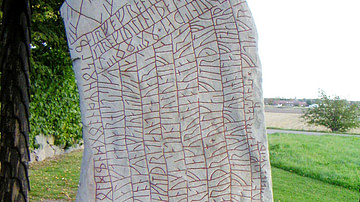
Runes
Runes are letters in the runic alphabets of Germanic-speaking peoples, written and read most prominently from at least c. 160 CE onwards in Scandinavia in the Elder Futhark script (until c. 700 CE) and the Younger Futhark - which illuminated...
Image
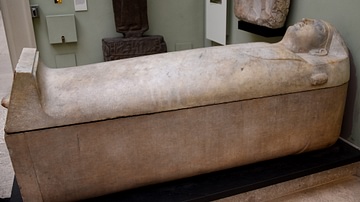
Phoenician Coffin from Sidon
This white marble anthropoid (human-shaped) coffin shows a male head wearing a Egyptian style headdress. Phoenician art was influenced by many different traditions. Coffins of this Gaeco-Egyptian style have been found...

Article
Top 5 Archaeological Sites in Lebanon
Home to some of the Middle East’s most majestic ancient ruins, Lebanon has a rich and varied heritage with over 5,000 years of recorded history. Over the millennia, different conquering empires have left their...

Definition
Canaan
Canaan was the name of a large and prosperous ancient country (at times independent, at others a tributary to Egypt) located in the Levant region of present-day Lebanon, Syria, Jordan, and Israel. It was also known as Phoenicia. The origin...

Definition
Script - The Written Record of Humanity
Script is the written expression of a language. Cuneiform, the first script, was invented in Sumer, Mesopotamia, circa 3600/3500 BCE; hieroglyphics sometime prior to the Early Dynastic Period in Egypt (circa...

Image
Greek & Phoenician Colonies
Greek (Red) and Phoenician (Yellow) colonization between the 8th and the 6th century BC.
German placenames.

Image
Phoenician Glassware
Two Phoenician coloured glass vessels. 5th-3rd century BCE. (Museum kunst Palast, Dusseldorf)

Image
Phoenician Ivory Sphinx Plaque
This ivory plaque is part of the so-called "Nimrud Ivories." The sphinx wears the typical Egyptian Pharaohs' double crown and an apron with cobra. This indicates that the plaque was made by a Phoenician craftsman...

Image
Phoenician-Punic Grinning Mask
Phoenician grinning mask, 4th century BCE, found in a grave at San Sperate in Sardinia. Masks like these were used to ward off evil. (Cagliari Museo Archeologico Nazionale)
