
Search
Remove Ads
Advertisement
Search Results

Video
The History of the Mesopotamian Naru Literature
The literary genre of Mesopotamian Naru Literature first appeared in the region around the second millennium BCE and the stories not only became very popular, but seemed to replace the actual historical...

Image
Mesopotamian Foundation Figurines
Certain types of figurines were commonly placed within foundations of buildings during the third dynasty of Ur (2100-2000 BCE) of the Neo-Sumerian Period, to commemorate the building of temples by the ruler. These...

Image
Calcite Statue of a Mesopotamian Man
Calcite figure of a man, with a cuneiform inscription on the right shoulder/upper arm. The text hasn't been deciphered yet, but probably it bears the dedicator's name. The nose might well have been attached separately...

Definition
Gutians - The Great Villains of the Sumerian Scribes
The Gutians were a West Asiatic people who are thought to have lived around the Zagros Mountains in a region referred to as Gutium. They had no written language and all that is known of them comes from...

Definition
Chogha Zanbil - The "Basket Mound" of the Gods
Chogha Zanbil (literally "basket mound") is an ancient Elamite temple complex located in the modern-day province of Khuzestan, Iran. It is also known as Dur-Untash (Fortress/City/Town of Untash), Tchogha...

Definition
Nanna - Mesopotamian God of the Moon and Wisdom
Nanna (also known as Nannar, Nanna-Suen, Sin, Asimbabbar, Namrasit, Inbu) is the Mesopotamian god of the moon and wisdom. He is one of the oldest gods in the Mesopotamian pantheon and is first mentioned...

Definition
Tiamat - The Great Mesopotamian Goddess of Chaos
Tiamat is the Mesopotamian goddess associated with primordial chaos and the salt sea, best known from the Babylonian epic Enuma Elish. In all versions of the myth, following the original, Tiamat always...
Image
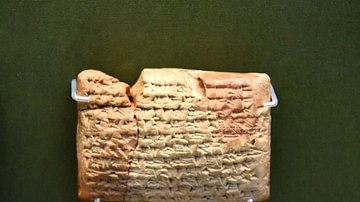
A Mesopotamian Tablet with Gynaecological Recipe Against Miscarriage
A medical recipe was written on this clay tablet to prevent miscarriage. It recommends that a women should wear for 3 days a particular species of dried edible mouse which has been stuffed...
Image
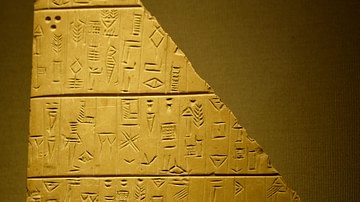
Mesopotamian Tablet with Puchase Details from Dilbat
This tablet lists purchases of land by a man named Tupsikka, with payments made in baskets of barley. One transaction reads "The price of the field is 90 gur-sag-gal 16 quarts of oil". Stone tablet...
Image
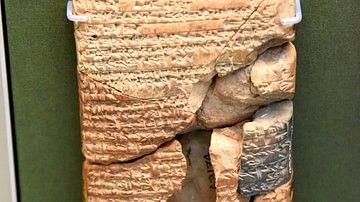
A Mesopotamian Tablet with Gynaecological Treatments
Recipes were written in cuneiform inscriptions. They concern conditions such as infertility and pregnancy. Probably from Babylon, Mesopotamia, Iraq. Circa 600-400 BCE. (The British Museum, London)
