
Search
Did you mean: Levant?
Remove Ads
Advertisement
Search Results

Article
Gobekli Tepe - the World's First Temple?
Located in modern Turkey, Göbekli Tepe is one of the most important archaeological sites in the world. The discovery of this stunning 10,000 year old site in the 1990s CE sent shock waves through the archaeological...

Article
The Book of Jonah
The book of Jonah is the fifth book in the Christian canons and the Jewish Tanakh. It is one of 'Trei Asar' (The Twelve) prophets in the tanakh, and in Christian tradition as 'oi dodeka prophetai' or 'ton dodekapropheton'...

Article
The Banquet Stele of Ashurnasirpal II
When he came to the throne in 884 BCE, Ashurnasirpal II had to attend to revolts which broke out across the empire. He ruthlessly put down all rebellions, destroyed the rebel cities and, as a warning to others...
Article
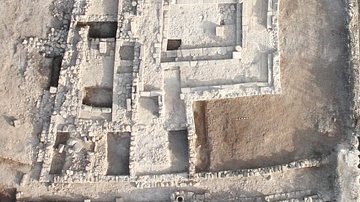
The Archaeological Excavations at Magdala
Magdala, known as Migdal in Hebrew (מִגְדָּל: tower) and also as Taricheae (Ταριχέα, from the Greek Τάριχος or tarichos: preserved by salting or drying fish), was an important fishing town during the first...

Article
Plagues of the Near East 562-1486 CE
Disease has been a part of the human condition since the beginning of recorded history – and no doubt earlier – decimating populations and causing widespread social upheaval. Among the worst infections recorded...

Article
Wine Culture in the Hellenistic Mediterranean
The culture of drinking wine was enjoyed throughout the Mediterranean world, and what is true now was true in antiquity, too: wine is always good business. The Hellenistic Period (c. 335-30 BCE), between...

Interview
Interview: Metsamor Archaeological Site
Metsamor, which is located 32 km (20 mi) west of Yerevan, Armenia is one of the most interesting archaeological sites in the Caucasus. While first settled and founded as a Bronze Age city, people continuously...

Image
Map of the Fertile Crescent
The term “Fertile Crescent”, coined in 1916 by Egyptologist James Henry Breasted, refers to a broad arc of land stretching from the eastern Mediterranean through Anatolia and into Mesopotamia. Encompassing parts of today’s...
Image
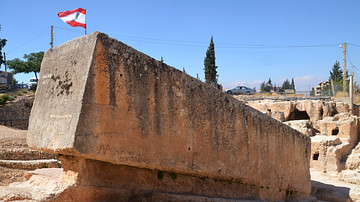
Baalbek Stones
The so-called Stone of the Pregnant Woman at the ancient quarry near Baalbek in Lebanon is one of the largest stone building blocks ever carved by human hands. It is 20.76 m (68.1 ft) long, 4 m (13.1 ft) wide, 4.32 m (14.1 ft...

Image
Alexander Sarcophagus (detail)
The Alexander Sarcophagus is a late 4th century BCE stone sarcophagus adorned with bas-relief carvings of Alexander the Great. The Alexander Sarcophagus is one of four massive carved sarcophagi, forming two pairs...
