
Search
Did you mean: Levant?
Remove Ads
Advertisement

 This answer was generated by
 Search Results
Article
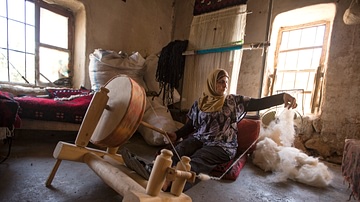
Ancient Handicrafts in Rural Lebanon
Traditional Lebanese handicrafts are considered to be a major sector of the living cultural heritage in the rural areas of Lebanon. Transmitted from one generation to another, traditional rural Lebanese handicrafts...

Article
Top 5 Archaeological Sites in Lebanon
Home to some of the Middle East’s most majestic ancient ruins, Lebanon has a rich and varied heritage with over 5,000 years of recorded history. Over the millennia, different conquering empires have left their...
Image
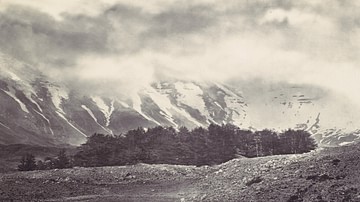
Cedars of Lebanon, 1857 CE
The first well-known pictures of the Cedar of Lebanon taken by the British photographer and orientalist Francis Frith (1822-1898 CE) in 1857 CE. The grove, known as the Cedars of God, is located in Bsharri, Lebanon and...
Image
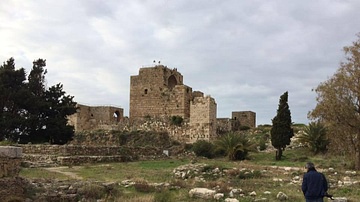
Byblos Castle, Lebanon
Byblos Castle, Lebanon, built by the Crusaders in the 12th century CE, it was surrounded by a moat. It belonged to the Genoese Embracio family, whose members were lord of Gibelet. The castle is adjacent to the Phoenician...
Image
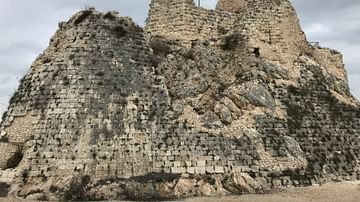
Beaufort Castle, Lebanon
Beaufort or Belfort Castle, known locally as Qal'at al-Shaqif, was a Crusader fortress in Southern Lebanon. The castle is situated on the site of a former fortress, which was captured by the Crusaders and given to the lords...
Image
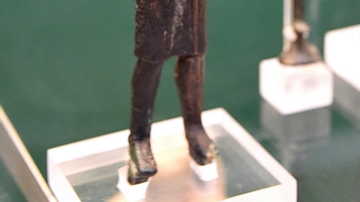
Copper Alloy Male Figure from Ancient Lebanon
From the mountain region; found in a hoard with 4 other similar figurines. The hands might have held a weapon. From Gezzine (Jezzine), modern-day Lebanon. Middle Bronze Age, 2400-2000 BCE. (The British...
Image
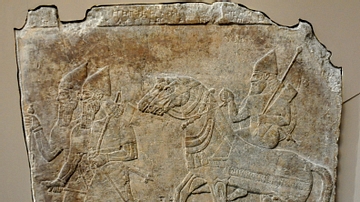
Assyrian Soldiers in Lebanon
This gypsum wall relief was part of a corner panel. It depicts Assyrian soldiers with horses crossing a mountainous area. The wavy lines and spirals at the bottom of the scene represent a river. The cuneiform inscriptions...
Image
Weaving in Rural Lebanon
Weaving is one of the traditional handicrafts still practised in the rural areas of Lebanon.
Image
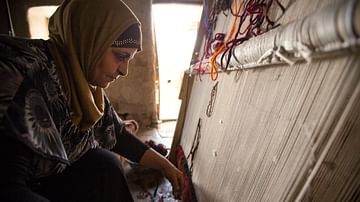
Woman Weaving, Lebanon
Ancient handicrafts such as weaving are part of Lebanon's living cultural heritage.

Image
Baalbek, Lebanon
Baalbek is an ancient Phoenician city located in what is now modern-day Lebanon, in the northern part of the Beqaa Valley, a fertile area with plentiful springs. First settled at the beginning of the 3rd millennium BCE, Baalbek...
