
Search
Remove Ads
Advertisement
Search Results

Definition
Gwanggaeto the Great
Gwanggaeto (Kwanggaeto), often referred to as Gwanggaeto the Great, was king of the Goguryeo (Koguryo) kingdom which ruled northern Korea during the Three Kingdoms period. Gwanggaeto reigned between 391 and 413 CE, and living...
Definition
Ennin
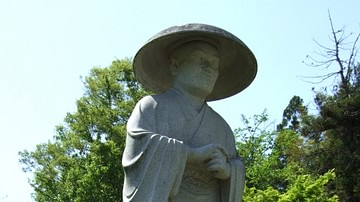
Ennin (c. 793-864 CE, posthumous title: Jikaku Daishi) was a Japanese Buddhist monk of the Tendai sect who studied Buddhism at length in China and brought back knowledge of esoteric rituals, sutras, and relics. On his return, he published...
Definition
Ninna-ji
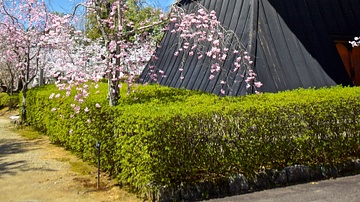
Ninnia-ji is a Shingon Buddhist temple complex located in Kyoto, Japan. Known as the 'Temple of Heavenly Benevolence', it was founded in 888 CE by Emperor Uda (r. 887-897 CE). Ninna-ji is listed by UNESCO as a World Heritage Site and...

Definition
Tokugawa Ieyasu
Tokugawa Ieyasu (1543-1616) was a Japanese military leader who reunified Japan at the beginning of the 17th century after a long period of civil war, known as the Warring States or Sengoku period. He created a new government controlled...

Definition
Kofun Period
Following the Yayoi Period of Japan when farming and metalworking techniques were introduced from mainland Asia was the Kofun Period (c. 250 CE - 538 CE) where the religion of Shinto emerges from the beliefs of previous eras and...
Definition
The Pillow Book
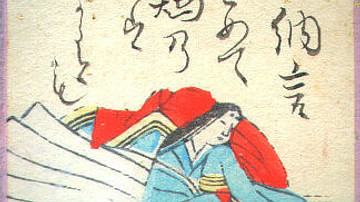
The Pillow Book (Makura no Soshi) is a personalised account of life at the Japanese court by Sei Shonagon which she completed c. 1002 CE during the Heian Period. The book is full of humorous observations (okashi) written in the...
Definition
Heiankyo
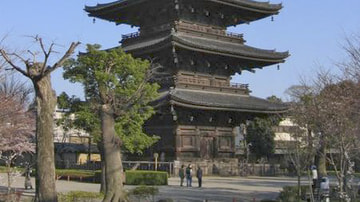
Heiankyo (Kyoto), located in the centre of Honshu island, was the capital of Japan for over a thousand years and gave its name to one of the golden ages of Japanese history, the Heian Period (794-1185 CE). Built according to Chinese...

Definition
Valhalla
Valhalla ("Hall of the Slain") is the afterlife realm in Norse mythology for fallen heroes selected by Odin’s Valkyrie to become members of the army that will fight against the forces of chaos at Ragnarök. The concept of Odin’s Hall...

Definition
Heimdall
Heimdall is a mysterious deity of Norse mythology whose main attribute refers to guarding the realm of the gods, Asgard, from his high fortress called Himinbjörg found at the top of Bifröst, the rainbow bridge. He has the might of sea...

Video
Fenrir: the GIANT Wolf Even Gods Feared - Norse Mythology Explained
Welcome to Mythology Explained. Today, we’re discussing Fenrir: the biggest, baddest wolf in all of Norse mythology. And there were many mighty wolves in Norse Mythology: there was Geri...
