
Search
Remove Ads
Advertisement
Search Results

Video
Fenrir: the GIANT Wolf Even Gods Feared - Norse Mythology Explained
Welcome to Mythology Explained. Today, we’re discussing Fenrir: the biggest, baddest wolf in all of Norse mythology. And there were many mighty wolves in Norse Mythology: there was Geri...

Video
Floods in the Ancient Near East: Crash Course World Mythology #16
This week on Crash Course mythology, Mike is talking to you about floods. You may have heard the story of Noah and the Ark from the Bible, but that is not the only deluge story humans tell...
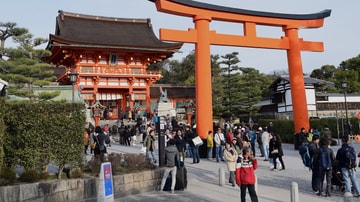
Definition
Shinto
Shinto means 'way of the gods' and it is the oldest religion in Japan. Shinto's key concepts include purity, harmony, family respect, and subordination of the individual before the group. The faith has no founder or prophets and there...

Definition
Ninigi
Ninigi-no-Mikoto, or simply Ninigi, is the grandson of the supreme Shinto deity Amaterasu, the sun goddess. He is the son of Ama-no-Oshiho-mimi and, descending to earth as the first just ruler, he brought with him gifts from Amaterasu...
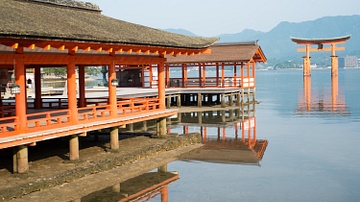
Definition
Itsukushima Shrine
Itsukushima Shrine is a Shinto shrine on the island of the same name, also known as Miyajima, located in Hatsukaichi, Hiroshima Prefecture, Japan. Traditionally founded in the 6th century CE, the present layout of buildings...
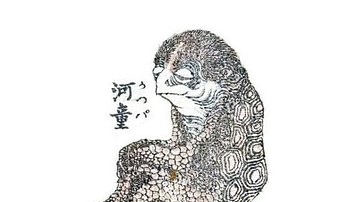
Image
Hokusai's Kappa, a Japanese Water Sprite
A drawing of a kappa, a Japanese mythological water sprite, by Katsushika Hokusai (1760-1849) as part of his wider work, the Hokusai Manga, which he began publishing in 1812.
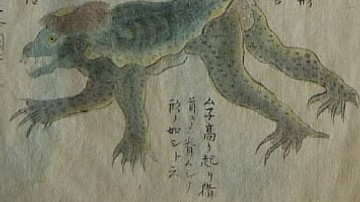
Image
Japanese Kappa, a Water Sprite
Drawing of a Japanese kappa, supposedly caught in 1801 in Mito domain. Illustration from an 1836 copy by Reikai of Suiko Kōryaku by Koga Tōan. The inscription reads: Height 3.5 shaku, weight 12 kamme. The chest protudes...

Video
The Greeks and Romans - Pantheons Part 3: Crash Course World Mythology #9
This week, we continue our look at various Pantheons, and Mike digs deep into the gods of the ancient Greeks. We're talking Zeus, Hera, Poseidon, Hades, Artemis, Hephaestos, Ares...
Article
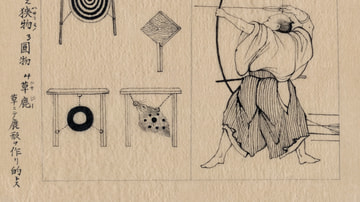
Martial Arts in Medieval Japan
There were 18 martial arts (bugei or bujutsu) in medieval Japan, and these included use of weapons, unarmed self-defence techniques, swimming, and equestrian skills. Initially designed to hone the skills of warriors...

Image
Japanese Troops Enter French Indochina, 1940
Japanese troops enter French Indochina and head towards Lang Son in what is northern Vietnam today. During 1940, Japan began to encroach on French Indochina so that they could cut off the supplies that were...
