
Search
Remove Ads
Advertisement
Search Results

Definition
Tokugawa Tsunayoshi
Tokugawa Tsunayoshi (1646-1709) governed Japan as the fifth shogun of the Edo period (1603-1876). He has often been ridiculed as the 'dog shogun' because of the laws he enacted to protect the lives of animals. Economically...

Definition
Ninigi
Ninigi-no-Mikoto, or simply Ninigi, is the grandson of the supreme Shinto deity Amaterasu, the sun goddess. He is the son of Ama-no-Oshiho-mimi and, descending to earth as the first just ruler, he brought with him gifts from Amaterasu...

Article
The Ideology of the Holy Roman Empire
"The Holy Roman Empire was in no way holy, nor Roman, nor an empire," wrote Voltaire, and this interpretation still dominates the popular imagination, so the Holy Roman Empire is treated as a bad joke, a pale...

Definition
Frederick II
Frederick II (l. 1194-1250 CE) was the king of Sicily (r. 1198-1250 CE), Germany (r. 1215-1250 CE), Jerusalem (r. 1225-1228 CE), and also reigned supreme as the Holy Roman Emperor (r. 1220-1250 CE). He was born in Jesi in 1194 CE...

Definition
Constantine VII
Constantine VII was Byzantine emperor from 945 until 959 CE. Sometimes known as Constantine Porphyrogennetos because of his birth in the purple chamber of the royal palace, he was served by various regents from 912 CE until reigning...
Definition
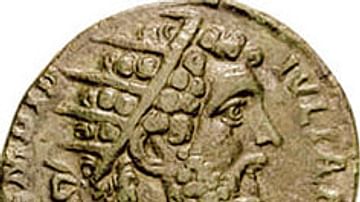
Didius Julianus
Didius Julianus was Roman emperor from March to June 193 CE. On March 28, 193 CE Roman Emperor Pertinax was assassinated by the Praetorian Guard, and like his predecessor Commodus, he left no apparent successor. Two possible claimants...
Definition
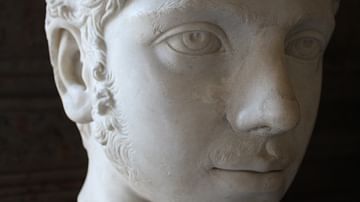
Elagabalus
Elgabalus was Roman emperor from 218 to 222 CE. Having failed to keep many of his promises to the army, Roman Emperor Macrinus (217 – 218 CE) was becoming increasingly unpopular, and it would only take a little lie from a young boy's...

Definition
Vespasian - The Commoner Who Became Roman Emperor
Vespasian (9-79 CE) was Roman emperor from 69 to 79 CE. Despite his low birth, he worked hard to rise through the ranks of Roman politics and eventually achieved prominence as a military commander. He...
Article
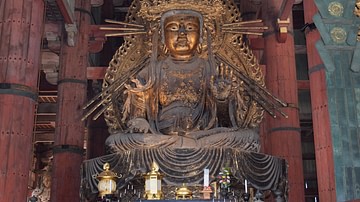
Buddhism in Ancient Japan
Buddhism was introduced to ancient Japan via Korea in the 6th century CE with various sects following in subsequent centuries via China. It was readily accepted by both the elite and ordinary populace because it confirmed...

Article
Food & Agriculture in Ancient Japan
The diet of ancient Japan was heavily influenced by its geography as an archipelago, foodstuffs and eating habits imported from mainland Asia, religious beliefs, and an appreciation for the aesthetic appearance...
