
Search
Remove Ads
Advertisement
Search Results
Image
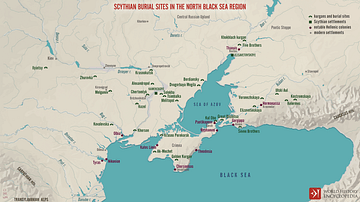
Scythian Burial Sites in the North Black Sea Region
A map illustrating the current archeological evidence for the spread of the Scythians in the northern Black Sea region. It shows the distribution of the most notable ‘kurgans’ and monumental burial...
Image
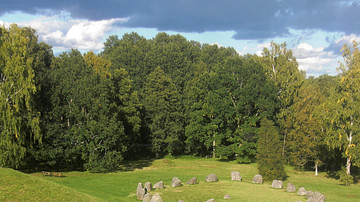
Scandinavian Stone Ship Burial
Early Scandinavian burial mound marked by stones laid out in a ship-pattern - a practice that was common in Scandinavia from the Bronze Age through the Viking Age. This particular one is situated in Anundshög, Västerås...
Image
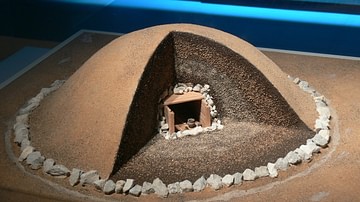
Celtic Burial Mound Reconstruction, Hallstatt
A reconstruction of a Celtic burial mound from the Hallstatt culture of Austria and central Europe in the 1st millennium BCE. (German National Museum, Nuremberg)
Image
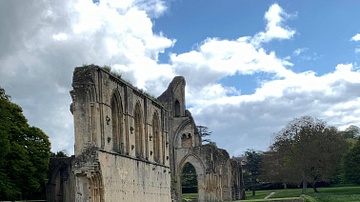
Ancient Burial Site of King Arthur and Guinevere at Glastonbury Abbey
The site where the monks of Glastonbury Abbey supposedly discovered King Arthur and his wife Guinevere’s burial site in 1191 CE. According to the story, Arthur and Guinevere were later...
Image
Celtic Burial Mounds
Reconstructions of Celtic burial mounds dating to the La Tène period (5th to 1st century BCE). The mounds were surrounded by circular ditches of 0.6 metres and 1.2 metres. European Archaeological Park of Bliesbruck-Reinheim...

Image
Plymouth Burial Hill
Burial Hill Cemetery, Plymouth, MA.
The cemetery has been in use since the 1620s and is the final resting place of many Mayflower passengers and Plymouth Colony's first settlers.
Image
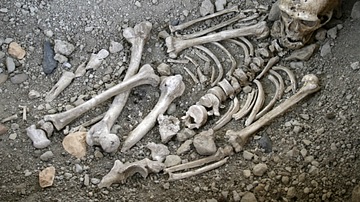
Neanderthal Burial, La Chapelle-aux-Saints (reconstruction)
Reconstruction of the Neanderthal burial at La Chapelle-aux-Saints, France, on display at Musée de La Chapelle-aux-Saints, Corrèze, France.
Image
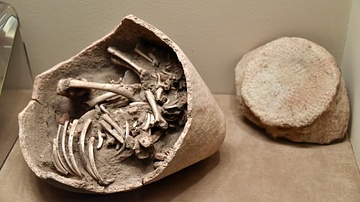
Infant Burial from Tulaylat al-Ghassul
Jar burials occur in many cultures. In Jordan, the practice of sometimes burying infants in jars appeared in the Chalcolithic period, where the corpse would be placed in the fetal position inside a jar after...

Image
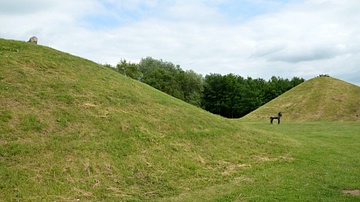
Rus Burial Mounds, Staraja Ladoga
Rus burial mounds dating to the 8-1oth century CE near Straraja Ladoga, Russia.
Image
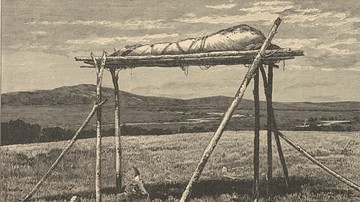
Dakota Scaffold Burial
Dakota scaffold burial, illustration from page 159 of A Further Contribution to the Study of Mortuary Customs of the North American Indians by Dr. H. C. Yarrow, Smithsonian Institution, Bureau of Ethnology, 1881.
