
Search
Remove Ads
Advertisement

 This answer was generated by
 Search Results

Definition
Burial
Burial of the dead is the act of placing the corpse of a deceased person in a tomb constructed for that purpose or in a grave dug into the earth. Archaeological excavations have revealed Neanderthal graves dating back 130,000 years, marking...
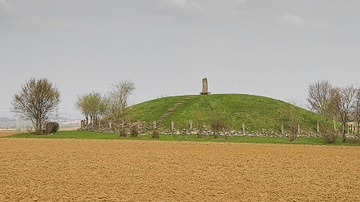
Image
Reconstruction of the Celtic Hochdorf Burial Mound
A reconstruction of the Celtic Hochdorf burial mound located near Baden-Württemberg in southwest Germany. The burial within a wooden chamber of a single male dates to the second half of the 6th century...

Article
Death, Burial & the Afterlife in the Ancient Celtic Religion
The ancient Celts who occupied large parts of Europe from 700 BCE to 400 CE displayed a clear belief in an afterlife as evidenced in their treatment of the dead. In the absence of extensive...
Definition
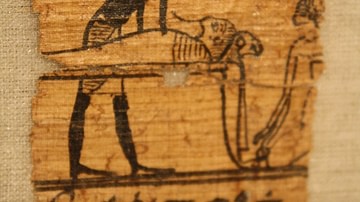
Ancient Egyptian Burial
Egyptian burial is the common term for the ancient Egyptian funerary rituals concerning death and the soul's journey to the afterlife. Eternity, according to scholar Margaret Bunson, “was the common destination of each man...

Article
Burial in Ancient Mesopotamia - Respect for the Living, Honoring the Dead
Burial in ancient Mesopotamia was the practice of interring a corpse in a grave or tomb while observing certain rites, primarily to ensure the passage of the soul of the deceased to...
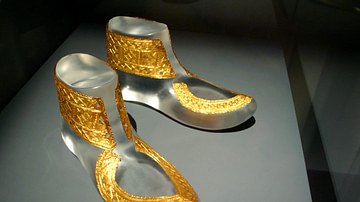
Image
Golden Shoes of Hochdorf
A pair of thin, embossed gold coverings, which decorated the shoes of the chieftain buried at Hochdorf around 530 BCE. Bern Historical Museum, Switzerland. The burial mound at Hochdorf is associated with the Hallstatt...
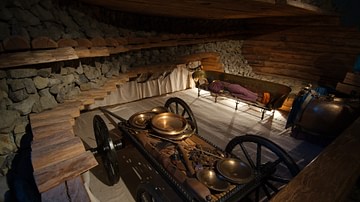
Image
Reconstruction of the Hochdorf Chieftain's Grave
A reconstruction of an Iron Age grave from Hochdorf an der Enz in Baden-Württemberg, Germany. This burial mound is associated with the Hallstatt Culture, and the man interred is believed to have been...
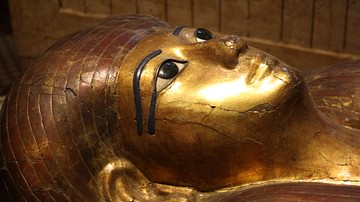
Article
Herodotus on Burial in Egypt
Herodotus' section of his Histories on burial in ancient Egypt (Book II.85-90) is an accurate description of Egyptian mummification, but he purposefully omits the spiritual significance of embalming in keeping with his...
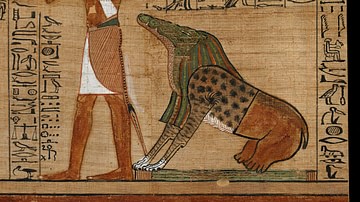
Collection
Funerary Rites, Burial, and the Afterlife of the Ancient Egyptians
Often misconstrued as a culture obsessed with death, the ancient Egyptians viewed death and the afterlife as an intimately connected continuance to life itself. Though funerary processions...

Article
The Rock-Cut Tombs of Qizqapan, Iraqi Kurdistan: Median or Achaemenid?
O Creator of the material world, at what distance from the holy man (should the place for the dead body be)?" Ahura Mazda replied: "Three paces from the holy man". (Vend. 8. 6-7) In...
