
Search
Remove Ads
Advertisement
Search Results

Video
Etruscan Burial Practices
This brief video describes the burial and funerary practices of the Etruscans.
Pictures- Google images, Deviantart

Video
Brú na Bóinne, Ireland: Prehistoric Burial Mounds
One hour north of Dublin in the Boyne River valley, evocative 5000-year-old (older than the pyramids!) burial mounds sprout from the lush Irish countryside. The best place for a glimpse of prehistoric...

Definition
Carnac
Carnac, located on the north-west coast of France, is the site of the largest concentration of megalithic monuments in the world. Over 100 monuments, which include burial mounds, stone tombs, enclosures, and linear arrangements of menhirs...

Article
Ghosts in Ancient China
Ghost stories were the earliest form of literature in ancient China. They were almost certainly part of a very old oral tradition before writing developed during the Shang Dynasty (1600-1046 BCE) and they continue to be...
Article
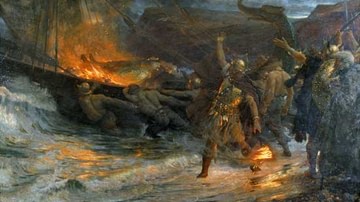
Norse Ghosts & Funerary Rites
In Norse belief, the soul of the deceased might wind up in any one of a number of afterlife realms. There was Valhalla, the realm of Odin where the dead warriors drank, fought, and told stories, Folkvangr ('the Field...

Definition
Kofun Period
Following the Yayoi Period of Japan when farming and metalworking techniques were introduced from mainland Asia was the Kofun Period (c. 250 CE - 538 CE) where the religion of Shinto emerges from the beliefs of previous eras and...

Definition
Clava Cairns - Monuments to Memory and More
Clava Cairns is an early Bronze Age site in Scotland, located east of the city of Inverness, consisting of three well-preserved cairns (two of which are passage graves) and a number of free-standing stones...

Definition
Tomb - Home of the Dead
A tomb is an enclosed space for the repository of the remains of the dead. Traditionally tombs have been located in caves, underground, or in structures designed specifically for the purpose of containing the remains of deceased...

Definition
Ghosts in the Ancient World - The Return of the So-Called Dead
A belief in an afterlife was central to every major civilization of the ancient world and this encouraged the recognition of the reality of ghosts as the spirits of the departed who, for one...

Article
Warrior Women of the World of Ancient Macedon
The 8th November is celebrated as Archangels Day in Greece, but on that November day in 1977 CE something remarkable happened: an excavation team led by Professor Manolis Andronikos were roped down into...
