
Search
Remove Ads
Advertisement
Search Results

Definition
Zhou Dynasty
The Zhou Dynasty (1046-256 BCE) was among the most culturally significant of the early Chinese dynasties and the longest lasting of any in China's history, divided into two periods: Western Zhou (1046-771 BCE) and Eastern Zhou (771-256...

Definition
Quran
The Quran (also written Qur’an or Koran), revealed in the 7th century, is the sacred book of Islam, following in the tradition of the Abrahamic faiths, with the Torah as the sacred book of Judaism and the New Testament as the sacred book...

Definition
Atalanta - The Huntress of Greek Mythology
Atalanta is a figure from Greek mythology famed as a huntress, wrestler, and runner. The heroine was a key participant in the Calydonian boar hunt, striking the first wound in this fearsome beast with her bow...

Definition
Hephaistos
Hephaistos (Hephaestus) was the ancient Greek god of fire, metallurgy, and crafts. He was the brilliant blacksmith of the Olympian gods, for whom he fashioned magnificent houses, armour, and ingenious devices. Hephaistos had his workshop...

Definition
Siren - The Woman-Bird Creatures of Greek Mythology
Sirens were creatures from Greek mythology that enticed sailors to their destruction with their irresistibly beautiful singing. The most famous appearance of sirens in literature is in Homer's Odyssey...

Definition
Leto
Leto is a Titan and the mother of the gods Apollo and Artemis in Greek mythology. Leto's twin children were the result of an amorous encounter with Zeus, and to avoid his wife Hera's wrath, the Titaness was obliged to give birth on the...
Definition
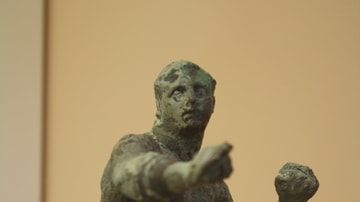
Pankration
Pankration is an ancient martial art which mixes wrestling and boxing. The sport can be traced as far back as the second millennium BCE in the territory of ancient Greece. Its name derives from the ancient Greek words pan (all) and...
Definition
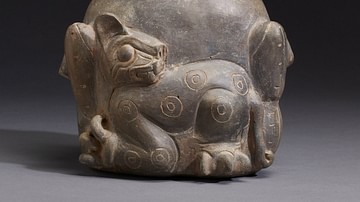
Chavin Civilization
The Chavin civilization flourished between 900 and 200 BCE in the northern and central Andes and was one of the earliest pre-Inca cultures. The Chavin religious centre Chavin de Huantar became an important Andean pilgrimage...

Definition
Three Kingdoms Period in Korea
The Three Kingdoms Period of ancient Korea (57 BCE – 668 CE) is so-called because it was dominated by the three kingdoms of Baekje (Paekche), Goguryeo (Koguryo), and Silla. There was also, though, a fourth entity...

Definition
Early Joseon Period
The Early Joseon Period (1392 - c. 1550 CE) in Korea was bookended by internal power struggles but witnessed major scientific and societal advances and prosperity. The Joseon (Choson) Dynasty ruled Korea from 1392 CE to 1897...
