The Twelve Olympian Gods of Ancient Greece

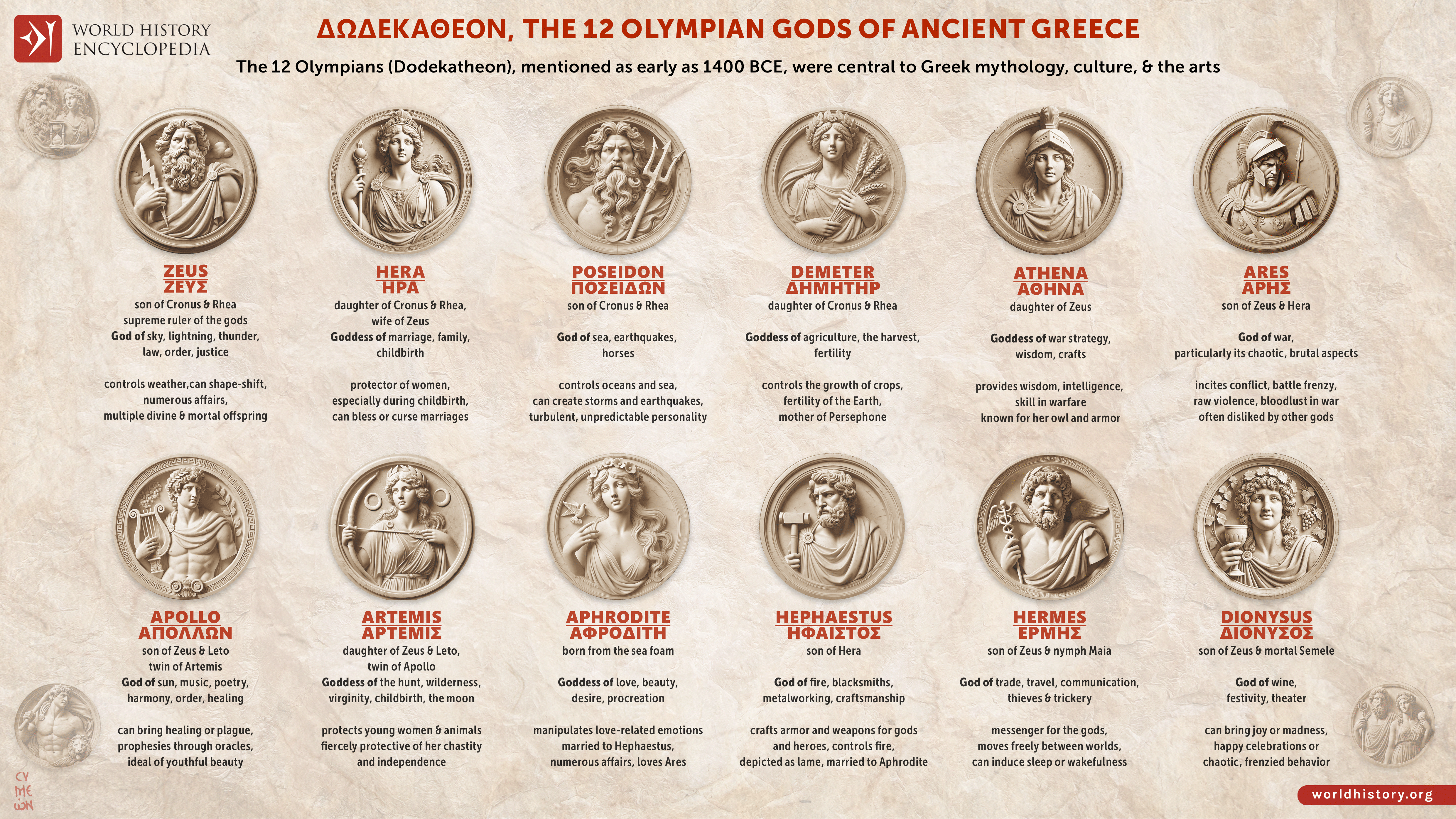
The Twelve Olympian Gods (Greek: Δωδεκάθεον, Dodekatheon) represent the core pantheon of ancient Greek religion, embodying divine authority over the natural world, human affairs, and cosmic order. Traditionally worshipped as the gods of Mount Olympus, they include Zeus (king of the gods, associated with thunder and law), Hera (marriage), Poseidon (the sea), Demeter (agriculture), Athena (wisdom and war), Apollo (light, prophecy, music), Artemis (the hunt and wilderness), Ares (war), Aphrodite (love), Hephaestus (craftsmanship), Hermes (messengers and trade), and Dionysus (wine and theater). Hades, though a brother of Zeus and Poseidon, was excluded from this group as ruler of the underworld. The concept of the Olympians has roots in the Mycenaean period (c. 1600–1100 BCE), with the earliest literary codification appearing in Homer’s Iliad and Odyssey and Hesiod’s Theogony (both c. 8th century BCE).
The identity of the Twelve was never fully fixed, reflecting the diversity of cult practices across the Greek world. In some traditions, Hestia, goddess of the hearth, replaced Dionysus, while figures such as Heracles, Leto, or Asclepius occasionally appeared among the Olympians. Their worship shaped Greek cultural identity and civic life, with festivals such as the Olympic Games (founded in 776 BCE) held in their honor. The Olympian pantheon provided a shared religious framework that unified the city-states while allowing local variation, and their myths deeply influenced later Roman religion and Western cultural traditions.