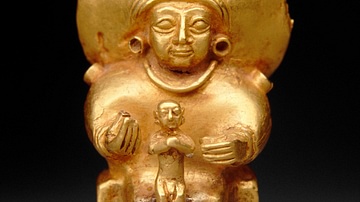
Mesopotamian goddesses are among the oldest in the world. Inanna is commonly referenced as the most ancient goddess, first worshipped during the Uruk Period (~4000–3100 BCE). Veneration of Inanna and the others developed throughout the Early Dynastic Period (~2900–2350/2334 BCE) and Akkadian Period (2350/2334–2154 BCE) and continued through the fall of the Neo-Assyrian Empire in 612 BCE.
During the reign of Hammurabi of Babylon (1792-1750 BCE), many of these goddesses were replaced by male deities – Nisaba, goddess of writing, replaced by Nabu, son of Marduk, for example – but many were still being worshipped during the Seleucid Period (312-63 BCE) and afterwards.