


The Epic of Gilgamesh is the oldest surviving work of epic literature, originating in Mesopotamia with its earliest Sumerian poems composed around c. 2100 BCE, during the period of early city-states in southern Mesopotamia. Centered on Gilgamesh, king of Uruk (a historical ruler traditionally dated to the early 3rd millennium BCE), the epic reflects ancient conceptions of kingship, divine favor, and human limitation. Rather than celebrating conquest alone, the narrative explores the tension between power and responsibility, civilization and nature, and mortality and memory, core concerns of early urban societies.
Over centuries, independent Sumerian stories were translated and synthesized into a standardized Akkadian version, preserved most fully on twelve clay tablets dating to c. 1200 BCE, discovered in the library of the Assyrian king Ashurbanipal (reigned 668–627 BCE) at Nineveh. The epic weaves myth, royal ideology, and cosmology, including a flood narrative that parallels later traditions, offering rare insight into Mesopotamian views of the gods, the natural world, and the human search for meaning. Its enduring legacy lies not in the promise of immortality, but in the recognition that human achievement, cities built, laws shaped, and stories remembered, is the true measure of lasting fame.
About the Author
Related Images

Flood Tablet of the Epic of Gilgamesh

Face of the Demon Humbaba
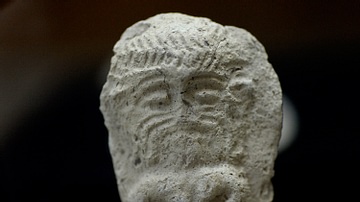
Humbaba the Ogre

Part of Tablet V, the Epic of Gilgamesh

Map of the Quest of Jason and the Argonauts

Map of the Sumerian Civilization - Where Cities Began
Cite This Work
APA Style
Netchev, S. (2025, July 07). The Epic of Gilgamesh in 12 Pictures. World History Encyclopedia. https://www.worldhistory.org/image/20646/the-epic-of-gilgamesh-in-12-pictures/
Chicago Style
Netchev, Simeon. "The Epic of Gilgamesh in 12 Pictures." World History Encyclopedia, July 07, 2025. https://www.worldhistory.org/image/20646/the-epic-of-gilgamesh-in-12-pictures/.
MLA Style
Netchev, Simeon. "The Epic of Gilgamesh in 12 Pictures." World History Encyclopedia, 07 Jul 2025, https://www.worldhistory.org/image/20646/the-epic-of-gilgamesh-in-12-pictures/.
