


The Seven Sages of ancient Greece (hoi hepta sophoi, "the Seven Wise Men") were a celebrated group of Archaic Greek thinkers, lawmakers, rulers, and statesmen remembered for practical wisdom and concise moral advice. Traditions about the sages developed during the 6th and 5th centuries BCE, and Plato gives the best-known canonical list in his Protagoras. Their famous maxims were part of a wider Greek tradition of proverbial wisdom and were often associated retrospectively with individual sages and with the sanctuary at Delphi.
- Thales of Miletus (c. 624–546 BCE) – philosopher, mathematician, and astronomer who sought rational explanations for natural phenomena and became one of the foundational figures of early Greek philosophy.
- Bias of Priene (6th century BCE) – judge and orator renowned in later tradition for fairness, legal wisdom, and advocacy on behalf of the vulnerable.
- Pittacus of Mytilene (c. 640–568 BCE) – military leader, lawgiver, and statesman who helped overthrow a tyrant and later governed Mytilene before voluntarily relinquishing power.
- Solon of Athens (c. 638–558 BCE) – lawgiver, poet, and statesman whose reforms addressed debt slavery, social inequality, and political participation and helped shape the later development of Athenian government.
- Chilon of Sparta (6th century BCE) – Spartan ephor and statesman traditionally associated with self-control, prudence, and the concise moral advice characteristic of Spartan culture.
- Cleobulus of Lindos (6th century BCE) – ruler of Lindos on Rhodes, remembered for political leadership, cultural patronage, poetry, and riddles emphasizing moderation and balance.
- Periander of Corinth (c. 627–585 BCE) – ruler of Corinth traditionally credited with strengthening trade, infrastructure, and public order, although ancient accounts also portray his rule as authoritarian.
The Seven Sages embodied a Greek ideal of practical wisdom applied to public and private life. Their sayings emphasized moderation, self-knowledge, foresight, justice, and restraint, while their careers connected wisdom with law, government, diplomacy, and civic responsibility. Although the precise membership of the group and the attribution of individual maxims varied in antiquity, the tradition became an enduring model of early Greek ethical and political thought.
About the Author
Related Images
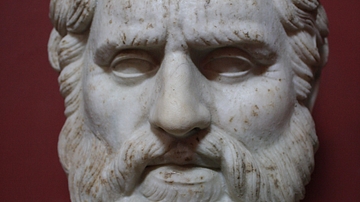
Bias of Priene

Thales of Miletus

Timeline of the Hellenic World (c. 3000-30 BCE) - The Rise, Transformation, and Legacy of Ancient Greece

Periander
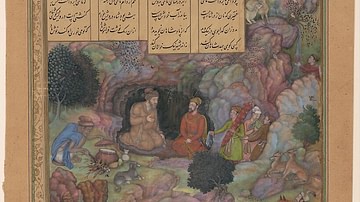
Alexander Visits the Sage Plato in his Mountain Cave

Solon
Cite This Work
APA Style
Netchev, S. (2024, November 26). 7 Sages of Ancient Greece and Their Wisdom: Thales, Solon and the Wise Men of Archaic Greece. World History Encyclopedia. https://www.worldhistory.org/image/19705/7-sages-of-ancient-greece-and-their-wisdom/
Chicago Style
Netchev, Simeon. "7 Sages of Ancient Greece and Their Wisdom: Thales, Solon and the Wise Men of Archaic Greece." World History Encyclopedia, November 26, 2024. https://www.worldhistory.org/image/19705/7-sages-of-ancient-greece-and-their-wisdom/.
MLA Style
Netchev, Simeon. "7 Sages of Ancient Greece and Their Wisdom: Thales, Solon and the Wise Men of Archaic Greece." World History Encyclopedia, 26 Nov 2024, https://www.worldhistory.org/image/19705/7-sages-of-ancient-greece-and-their-wisdom/.
