


The First Crusade (1096–1099) marked the beginning of a series of military campaigns launched by Western European Christians in response to Pope Urban II's appeal at the Council of Clermont (1095). The goal was to recapture Jerusalem and other holy sites in the Levant from Muslim rule. Motivated by a mixture of religious fervor, the promise of spiritual salvation, feudal ambition, and the lure of adventure, aristocrats and knights from across Europe assembled immense armies that marched eastward through the Byzantine Empire and Asia Minor. Despite enormous difficulties, logistical challenges, and internal divisions, the Crusaders persevered, culminating in the siege and capture of Jerusalem in July 1099.
The aftermath of the Crusade transformed the Mediterranean world and Christian-Muslim relations for centuries. The victors founded a series of crusader states—including the Kingdom of Jerusalem, the Principality of Antioch, and the County of Edessa—which became outposts of Latin Christianity in the East. The success of this campaign inspired subsequent Crusades, intensified cultural and religious contacts between Europe and the Islamic world, and strengthened papal authority in Europe. However, it also marked the beginning of new cycles of violence, mistrust, and competing claims to legitimacy that resonated throughout medieval geopolitics and religious traditions.
About the Author
Related Images

Map of the Crusader States (Outremer), 1096-1291

Map of the First Three Crusades & the 12th-Century Outremer

Map of the Crusader States, 1229-1240 CE

Map of the Seljuk Sultanate of Rum, c. 1200
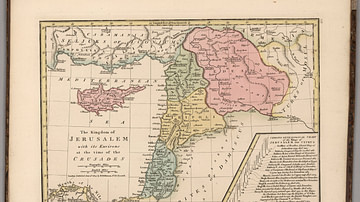
Kingdom of Jerusalem at the Time of the Crusades

Crusader States 1200 CE
Cite This Work
APA Style
Netchev, S. (2024, September 11). Map of the First Crusade, 1096 - 1099. World History Encyclopedia. https://www.worldhistory.org/image/19429/map-of-the-first-crusade-1096---1099/
Chicago Style
Netchev, Simeon. "Map of the First Crusade, 1096 - 1099." World History Encyclopedia, September 11, 2024. https://www.worldhistory.org/image/19429/map-of-the-first-crusade-1096---1099/.
MLA Style
Netchev, Simeon. "Map of the First Crusade, 1096 - 1099." World History Encyclopedia, 11 Sep 2024, https://www.worldhistory.org/image/19429/map-of-the-first-crusade-1096---1099/.
