
Search
Remove Ads
Advertisement
Search Results

Image
Routes of the Badr Campaign, 624 CE
A map of the troop movements which led to the Battle of Badr, in 624 CE. This map details the movements of the Meccan caravan from Syria, the Muslim raiding party which pursued it, and the Meccan relief force which...

Definition
Timbuktu - West Africa's Great Trading Centre
Timbuktu (Timbuctoo) is a city in Mali, West Africa which was an important trade centre of the Mali Empire which flourished between the 13th and 15th centuries. The city, founded c. 1100, gained wealth from...

Definition
Portuguese Malacca
The Portuguese colonised Malacca (modern Melaka) on the southwest coast of the Malay peninsula from 1511 and kept it until 1641 when the Dutch took over. The port controlled the Malay Straits which lead from the Indian Ocean...
Definition
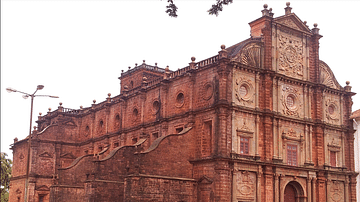
Portuguese Goa
Goa, located on the west coast of India, was a Portuguese colony from 1510 to 1961. The small coastal area was conquered by Afonso de Albuquerque (c. 1453-1515) and became an important trade hub for the Eastern spice trade. Goa...

Image
Map of the Trade Networks in the Middle Ages, c. 1200
By the early 13th century (c. 1200 CE), long-distance trade networks across Eurasia and the Mediterranean had regained a level of interconnectivity not seen since late antiquity. After the political...

Image
Map of the Roman Trade with the East, c. 1st–3rd Centuries - Silk Roads and Indian Ocean Routes across Afro-Eurasia
Roman trade with the East refers to the overland and maritime exchange networks that connected the Roman Empire with Parthian Iran, the Kushan Empire...

Image
Map of the Trade Networks of the Ancient Mediterranean World - Connectivity & Expansion in the Archaic and Classical Ages
Between the 7th and 4th centuries BCE, the Mediterranean functioned as a highly interconnected zone of maritime exchange, shaped by the expanding...

Image
Map of the East India Company Trade, c.1800
The English East India Company (EIC) was established by Royal Charter on 31 December 1600 under Queen Elizabeth I (reign 1558–1603), granting it a monopoly on English trade east of the Cape of Good Hope...

Collection
Trade & Commerce in Ancient Greece
The ancient Mediterranean was a busy place with trading ships sailing in all directions to connect cities and cultures. The Greeks were so keen on the rewards of trade and commerce that they colonized large parts...

Image
Map of the Hanseatic League Trade Network, c. 1400
The Hanseatic League (c. 13th–17th centuries) was a powerful network of merchant guilds and cities that dominated trade across northern Europe for centuries. Emerging in the late Middle Ages, the League...
