
Search
Remove Ads
Advertisement
Search Results
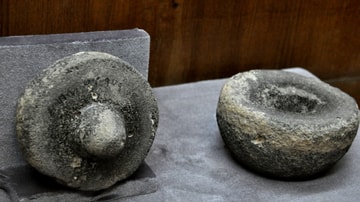
Definition
Mesopotamian Science and Technology - Scientific Method in the Ancient Near East
Mesopotamian science and technology developed during the Uruk period (circa 4000-3100 BCE) and the Early Dynastic period (circa 2900-2350/2334 BCE) of the Sumerian culture of...

Definition
Sargon of Akkad - From Gardener to King of the Four Corners of the World
Sargon of Akkad (reign 2334-2279 BCE) was the king of the Akkadian Empire of Mesopotamia, the first multinational empire in history, who united the disparate kingdoms of the region under...

Article
Mesopotamia: The Rise of the Cities - Personal Identity, Safety, and Civilization in the Near East
Once upon a time, in the land known as Sumer, the people built a temple to their god, who had conquered the forces of chaos and brought order to the world. They...
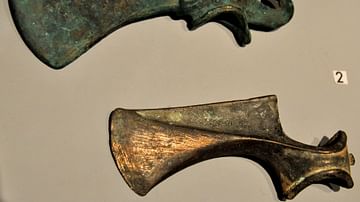
Collection
Fertile Crescent - Cradle of Civilization
The Fertile Crescent is a region stretching from northern Egypt across to the Persian Gulf and was the home to the oldest civilizations in history such as the Sumerians, earning it the common name of the 'Cradle...

Article
Trade in Ancient Mesopotamia - How Commerce Encouraged Civilization
Local trade in ancient Mesopotamia began in the Ubaid period (circa 6500-4000 BCE), had developed into long-distance trade by the Uruk period (circa 4000-3100 BCE), and was flourishing by...

Definition
Code of Ur-Nammu - The Oldest Law Code in the World
The Code of Ur-Nammu (circa 2100-2050 BCE) is the oldest extant law code in the world. It was written by the Sumerian king Ur-Nammu (reign circa 2112-2094 BCE) or his son Shulgi of Ur (reign 2094 to...
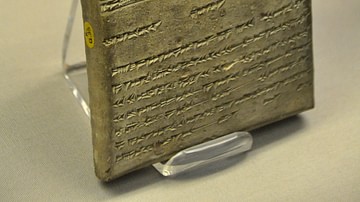
Image
Sumerian Hymn to Ishtar
This hymn to the goddess Ishtar is written in Sumerian; after every line in Sumerian, the text is translated in Akkadian. Such translations have been invaluable to modern scholars. They reflect how the Sumerian language...

Definition
Aryan
Aryan is a designation originally meaning “civilized”, “noble”, or “free” without reference to any ethnicity. It was first applied as a self-identifying term by a migratory group of people from Central Asia later known as Indo-Iranians...

Article
Mesopotamian Education - Creating the First Written Works in History
Mesopotamian education was invented by the Sumerians following the creation of writing circa 3600/3500 BCE. The earliest schools were attached to temples, but later schools were established...

Definition
Cuneiform - The Writing System That Made History
Cuneiform is a system of writing first developed by the ancient Sumerians of Mesopotamia circa 3600/3500 BCE. It is considered the most significant among the many cultural contributions of the Sumerians...
