
Search
Did you mean: Sepoy?
Remove Ads
Advertisement
Search Results

Definition
Batu Khan
Batu Khan (l. 1205-1255 CE) was a grandson of Genghis Khan and the founder of the Golden Horde. Batu was a skilled Mongol military commander and won battles from China to Persia, although his most famous exploits involve the grand Mongol...
Definition
Scythian Religion
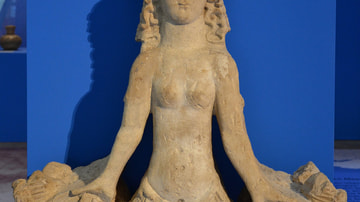
Scythian religion appears to be an amalgam of belief in a pantheon of gods grafted to more ancient animal reverence and shamanistic practice. According to their burial finds, the Scythians appear to have had a deep affinity with the animals...
Definition
Scythian Art
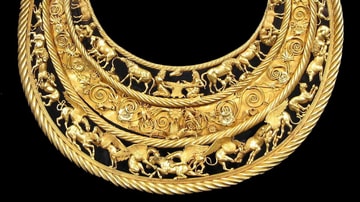
Scythian art is best known for its 'animal art.' Flourishing between the 7th and 3rd centuries BCE on the steppe of Central Asia, with echoes of Celtic influence, the Scythians were known for their works in gold. Moreover, with the recent...

Video
Author Talk: The Scythians with Barry Cunliffe
Brilliant horsemen and great fighters, the Scythians were nomadic horsemen who ranged wide across the grasslands of the Asian steppe from the Altai mountains in the east to the Great Hungarian Plain in the first millennium BC. Their steppe...

Article
The Crusades: Causes & Goals
The Crusades were a series of military campaigns organised by Christian powers in order to retake Jerusalem and the Holy Land back from Muslim control. There would be eight officially sanctioned crusades between 1095 CE and 1270 CE and many...

Article
Food & Drink in the Mongol Empire
The diet of the Mongols was greatly influenced by their nomadic way of life with dairy products and meat from their herds of sheep, goats, oxen, camels, and yaks dominating. Fruit, vegetables, herbs, and wild game were added thanks to foraging...

Article
Religion in the Mongol Empire
The Mongol Empire (1206-1368 CE) covered Asia from the Black Sea to the Korean peninsula and so naturally included all manner of religions within its borders, but the Mongols themselves had their own particular religious beliefs and rituals...

Article
The Mongol Invasion of Europe
The Mongol invasions of Russia and Eastern Europe occurred first with a brief sortie in 1223 CE and then again in a much larger campaign between 1237 CE and 1242 CE. The Mongols, seemingly coming from nowhere and quickly gaining a reputation...

Article
Mongol Multiculturalism
The Mongol Empire accepted and promoted many other cultures. Historians often talk about cultural exchange across Asia in the Mongol Empire as something that was just facilitated by peace and stability across such a huge area – the 'Pax Mongolica'...

Article
New Gilgamesh Fragment: Enkidu's Sexual Exploits Doubled
Sometimes it is the smallest discoveries that have the largest impact. When Alexandra Kleinerman and Alhena Gadotti found a new fragment of the Epic of Gilgamesh in 2015 CE, it did not seem to be particularly impressive. The broken tablet...
