
Search
Did you mean: Roman Art?
Remove Ads
Advertisement
Search Results

Article
The Ancient Celtic Pantheon
The ancient Celtic pantheon consisted of over 400 gods and goddesses who represented everything from rivers to warfare. With perhaps the exception of Lugh, the Celtic gods were not universally worshipped across Iron Age...

Article
Banking in the Roman World
Just as in other ancient civilizations, the first banks in Rome began in the temples consecrated to the ancient Gods. Many temples held in their basements the Romans' money and treasure, and were involved in banking activities...

Article
The Integration of Church and State in the Roman Empire
In the ancient world, "religion" and society were not separate entities. Various gods dictated covenants, "law-codes," and social conventions. Such law-codes were most often the responsibility of...

Definition
Cniva - The Goth King Who Defeated Rome
Cniva (also given as Kniva, reign circa 250 to possibly 270) was the king of the Goths who defeated Emperor Decius (reign 249-251) at the Battle of Abritus in 251. Little is known of him other than his campaign...

Video
An Introduction to Ancient Roman Literature
From its infancy, Roman literature borrowed heavily from the Greeks. However, they were able to shake the shackles and create a vibrant literature of their own; poetry, prose, and history. The Roman authors...

Definition
Cassius Dio
Cassius Dio (c. 164 - c. 229/235 CE) was a Roman politician and historian. Although he held a number of political offices with distinction, he is best known for his 80-volume Roman History. The work took 22 years to complete, was...

Definition
Caratacus - The Catuvellauni Chieftain Who Defied Rome
Caratacus (or Caractacus) was a Briton tribal leader who led the resistance against the Roman conquest of Britannia during the 1st century CE. When Roman emperor Claudius (reign 41-54 CE) invaded...

Article
Food in the Roman World
The ancient Mediterranean diet revolved around four staples, which, even today, continue to dominate restaurant menus and kitchen tables: cereals, vegetables, olive oil and wine. Seafood, cheese, eggs, meat and many types...
Article
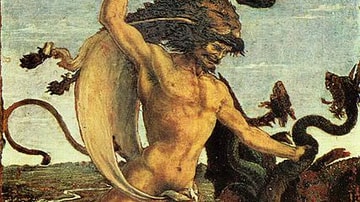
Mythological Re-Enactments in Ancient Roman Spectacle
To this day the ancient Romans remain infamous for their dramatic use of spectacle and other forms of entertainment. A lesser known variation of Roman spectacle is the mythological re-enactments that...

Article
Roman Tunnels
The first tunnels in the Mediterranean were built to transport water from distant springs and mountains to arid areas and cities. They also ensured the constant supply of water when cities were under siege. For example, the 533...
