
Search
Did you mean: Phoenicia?
Remove Ads
Advertisement
Search Results
Image
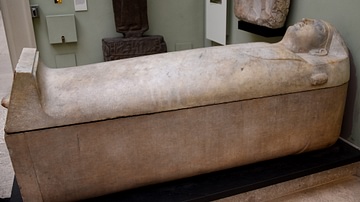
Phoenician Coffin from Sidon
This white marble anthropoid (human-shaped) coffin shows a male head wearing a Egyptian style headdress. Phoenician art was influenced by many different traditions. Coffins of this Gaeco-Egyptian style have been found in large numbers at...

Image
Phoenician Glassware
Two Phoenician coloured glass vessels. 5th-3rd century BCE. (Museum kunst Palast, Dusseldorf)

Image
Phoenician Ivory Sphinx Plaque
This ivory plaque is part of the so-called "Nimrud Ivories." The sphinx wears the typical Egyptian Pharaohs' double crown and an apron with cobra. This indicates that the plaque was made by a Phoenician craftsman. From Nimrud (ancient Kalhu...

Image
Phoenician-Punic Grinning Mask
Phoenician grinning mask, 4th century BCE, found in a grave at San Sperate in Sardinia. Masks like these were used to ward off evil. (Cagliari Museo Archeologico Nazionale)
Image
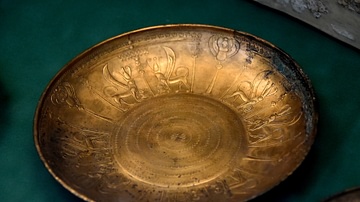
Phoenician Bronze Bowl From Nimrud
This bowl was part of a hoard found by Sir Henry Layard in 1850-1851 CE in the North-West Palace at Nimrud (ancient Kalhu). They were probably deposited there in the 8th century BCE. The decoration on the bowls is Phoenician, very similar...
Image
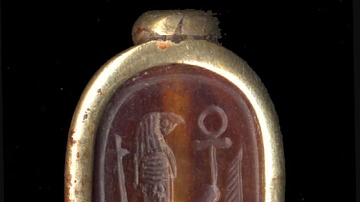
Phoenician Scarab Seal
A Phoenician carved scarab seal (sard and gold) depicting the hawk of Horus holding an ankh and a feather of Maat. 750-500 BCE. (British Museum, London)
Image
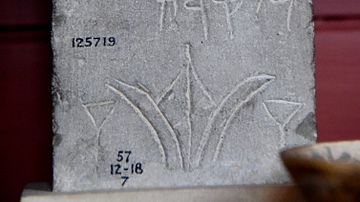
Phoenician Stela Dedicated to Tanit & Baal-Hammon
This light grey limestone stela was inscribed with six lines of Phoenician/Punic inscription; the upper line is almost lost. There is a lotus flower flanked by two standards at the lower part. There is a dedication to the goddess Tanit and...
Image
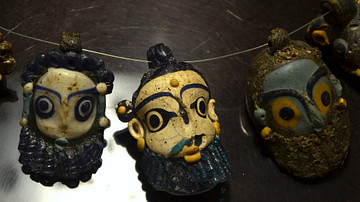
Phoenician/Punic Necklace with Amulets
Phoenician or Carthaginian amulets in the form of bearded heads made of sand-core glass, 4th-3rd century BCE (Cagliari, Museo Archeologico Nazionale).
Image
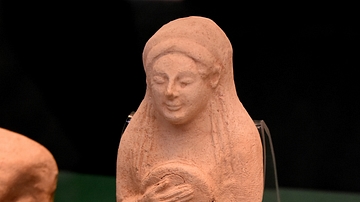
Phoenician Tambourine Player from Tharros
This is a baked clay votive figurine of woman playing a tambourine. The curls of her hair show a Greek influence. The Canaanite traditions of terracotta figurine manufacturer were continued by the Phoenicians, both at home and in the colonies...
Image
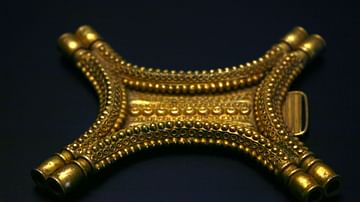
Phoenician-Punic Gold Pectoral
A Phoenician-Punic gold pectoral, 8th-7th Century BCE. From the El Carambolo Treasure, Seville. (National Archaeological Museum, Madrid)
