
Search
Remove Ads
Advertisement
Search Results

Article
Indian Ocean Trade before the European Conquest
Finding a maritime route to the East and gaining access to the lucrative spice trade stood at the root of the European Age of Exploration. However, when Vasco da Gama rounded the Cape of Good Hope and reached the Indian Ocean in 1493, he...

Article
Pirate Punishments in the Golden Age of Piracy
Pirates in the Golden Age of Piracy (1690-1730) both dished out and received a wide range of imaginative punishments. Victims of piracy endured torture, floggings, and ceremonies of humiliation, but when brought to justice, the pirates were...

Article
Fall of the East India Company
The British East India Company (1600-1874) was the largest and most successful private enterprise ever created. All-powerful wherever it colonised, the EIC's use of its own private army and increasing territorial control, particularly in...

Article
Treasure & Booty in the Golden Age of Piracy
During the Golden Age of Piracy (1690-1730), pirates were first and foremost after gold, silver, and jewels, but if these could not be grabbed, then a ship’s cargo would be taken for resale at a pirate haven. Shared amongst the crew, the...
Article
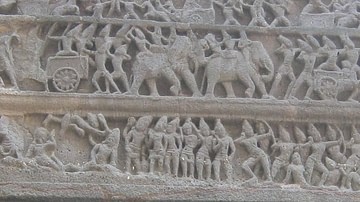
Elephants In Ancient Indian Warfare
Elephants were used in the ancient Indian army, irrespective of regions, dynasties, or points in time; their importance was never denied and continued well into the medieval period as well. The ready availability in the subcontinent of the...

Article
Copies & Fakes in Art during the Renaissance
The Renaissance period witnessed a great renewed interest in the art of antiquity. There was an appreciation of the technical skill required to produce such objects as a Roman marble figure of Venus and an admiration for the form and beauty...
Article
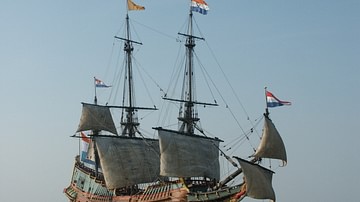
Wreck of the Batavia
The Batavia was a Dutch East India Company ship that foundered on the coral reefs of the Houtman Albrolhos Islands, 60 kilometres (37 mi) off the coast of Western Australia, just before dawn on 4 June 1629. It was the flagship of a fleet...

Article
Mandu - City of Joy
The city of Mandu is situated about 35 km from Dhar in the Madhya Pradesh region of northern-central India. Most of the city's monuments date to the 15th and 16th century CE. The city is located on a hill which rises 633 m above the sea level...
Article
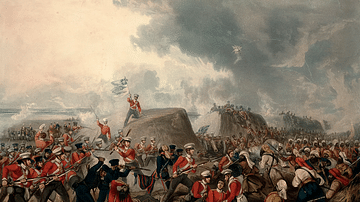
Battle of Sobraon
The Battle of Sobraon on 10 February 1846 was the last of four major victories for the British East India Company (EIC) against the Sikh Empire during the First Anglo-Sikh War (1845-6). Lieutenant-General Sir Hugh Gough (1779-1869) commanded...

Article
Battle of Aliwal
The Battle of Aliwal on 28 January 1846 saw the British East India Company (EIC) defeat the Sikh Empire. One of four major battles during the First Anglo-Sikh War (1845-6), Aliwal was a decisive victory where the EIC's Bengal Lancers cavalry...
