
Search
Remove Ads
Advertisement
Search Results

Definition
Angkor Wat
Angkor Wat is a temple complex in the province of Siem Reap, Cambodia originally dedicated to the Hindu god Vishnu in the 12th century CE. It is among the largest religious buildings ever created, second only to the Temple of Karnak...

Definition
Kharosthi Script
The Kharosthi script (also known as 'Indo-Bactrian' script) was a writing system originally developed in present-day northern Pakistan, sometime between the 4th and 3rd century BCE. Kharosthi was employed to represent a form of...

Article
Diodorus Siculus' Account of the Life of Semiramis
Semiramis is the semi-divine Warrior-Queen of Assyria, whose reign is most clearly documented by the Greek historian Diodorus Siculus (l. 90-30 BCE) in his great work Bibliotheca Historica ("Historical...

Definition
Ereshkigal - Mesopotamian Queen of the Dead
Ereshkigal (also known as Irkalla and Allatu) is the Mesopotamian Queen of the Dead, who rules the underworld. Her name translates as "Queen of the Great Below" or "Lady of the Great Place." She was responsible...

Definition
Zakros
Ideally situated in a sheltered gulf surrounded by mountains, Zakros (or Kato Zakros) in south-eastern Crete, was the fourth largest Minoan settlement after Knossos, Phaistos and Malia. The ancient name has been lost and the present one...

Definition
Carthaginian Art
The art of the Carthaginians was an eclectic mix of influences and styles, which included Egyptian motifs, Greek fashion, Phoenician gods, and Etruscan patterns. Precious metals, ivory, glass, terracotta, and stone were transformed...

Definition
Ancient Greek Dance
In ancient Greece, dance had a significant presence in everyday life. The Greeks not only danced on many different occasions, but they also recognized several non-performative activities such as ball-playing or rhythmic physical...

Definition
Byzantine Empire
The Byzantine Empire existed from 330 to 1453. It is often called the Eastern Roman Empire or simply Byzantium. The Byzantine capital was founded at Constantinople by Constantine I (r. 306-337). The Byzantine Empire varied in...

Definition
Minoan Art
The art of the Minoan civilization of Bronze Age Crete (2000-1500 BCE) displays a love of animal, sea, and plant life, which was used to decorate frescoes and pottery and also inspired forms in jewellery, stone vessels, and sculpture...
Definition
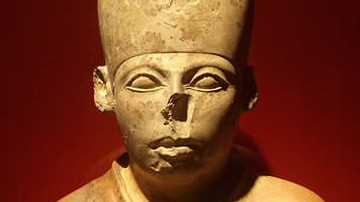
Second Dynasty of Egypt
The Second Dynasty of Egypt (c. 2890 - c. 2670 BCE) rose from the turmoil which ended the first and was marked by uprisings (or, at least, internal difficulties) throughout. The precise cause of this civil unrest is unclear...
