
Search
Remove Ads
Advertisement
Search Results

Definition
Horae
The Horae (Horai, sing. Hora) were the personification and goddesses of the seasons and the hours and, later on, were regarded as goddesses of order and justice in Greek mythology. They were the daughters of Zeus and the Titaness Themis...

Definition
Xenophon
Xenophon of Athens (l. 430 to c. 354 BCE) was a contemporary of Plato and a fellow student of Socrates. He is best known for his Anabasis (The March Up Country) detailing the retreat of the Ten Thousand Greek mercenaries after the defeat...

Definition
Fire Temple
Fire Temples are places of worship in the Zoroastrian religion. They were known as ataskada (“house of fire”) by the Persians but are best known today by their Greek name pyratheia (fire temple). They are thought to have originated...

Definition
Ereshkigal - Mesopotamian Queen of the Dead
Ereshkigal (also known as Irkalla and Allatu) is the Mesopotamian Queen of the Dead, who rules the underworld. Her name translates as "Queen of the Great Below" or "Lady of the Great Place." She was responsible...
Definition
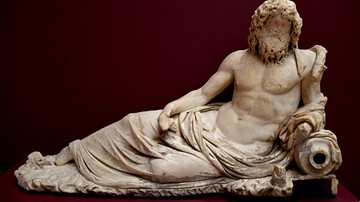
Oceanus
Oceanus (also Okeanos) was the eldest of the Titans and a son of Uranus (Heaven) and Gaia (Earth) in Greek mythology. He was the god and personification of the freshwater river Oceanus, which was thought to encircle the earth and was...
Definition
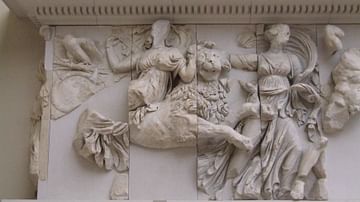
Rhea
Rhea (also spelt Rheia) is a Titan and a mother goddess in Greek mythology. She is the daughter of Gaia (Earth) and Uranus (Heaven) and the mother of the great deities of Mount Olympus. Rhea was closely associated with the Phrygian (Anatolian...

Definition
Ma'at
Ma'at (pronounced may-et) is the ancient Egyptian goddess of truth, justice, harmony, and balance (a concept known as ma'at in Egyptian) who first appears during the period known as the Old Kingdom (c. 2613 - 2181 BCE) but no doubt existed...

Definition
Sif
Sif is a fertility goddess in Norse mythology, wife of the thunder god Thor, best known for the story in which the trickster god Loki cuts her hair as a prank and is forced to replace it with a magical headpiece, leading to the creation...

Definition
Amarna Period of Egypt
The Amarna Period of ancient Egypt was the era of the reign of Akhenaten (1353-1336 BCE), known as 'the heretic king'. In the 5th year of his reign (c. 1348 BCE), he issued sweeping religious reforms which resulted in the...

Definition
Mesopotamian Art and Architecture - The Birth of Art and Architecture in the Ancient World
Ancient Mesopotamian art and architectural works are among the oldest in the world, dating back over 7,000 years. The works first appear in northern Mesopotamia prior...
