
Search
Remove Ads
Advertisement
Search Results

Article
Conflict Between the Temple and the Crown in Ancient Egypt
The gods of ancient Egypt were worshipped as the creators and sustainers of all life. People acknowledged their supremacy and intimacy daily through rituals, amulets, and their labor for the king...
Definition
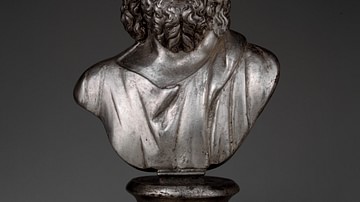
Serapis
Serapis is a Graeco-Egyptian god of the Ptolemaic Period (323-30 BCE) of Egypt developed by the monarch Ptolemy I Soter (r. 305-282 BCE) as part of his vision to unite his Egyptian and Greek subjects. Serapis’ cult later spread throughout...

Article
Setna I: A Detailed Summary & Commentary
Setna I (also Setna Khaemaus and the Mummies) is a work of ancient Egyptian literature from the Ptolemaic Period (323-30 BCE) written in demotic script. It is part of a cycle of stories known as the Tales of...

Article
Women in Ancient Egypt
Women in ancient Egypt were regarded as the equals of men in every aspect save that of occupation. The man was the head of the household and nation, but women ran the home and contributed to the stability of that nation as...

Video
Ancient Egyptian Dance and Music
In Ancient Egyptian society, both dance and music were highly valued. They were integral to creation and communication with the gods and there was an intrinsic link between music and dance and the divine. The goddess...

Definition
Apis
Apis was the most important and highly regarded bull deity of ancient Egypt. His original name in Egyptian was Api, Hapi, or Hep; Apis is the Greek name. He is not, however, associated with the god Hapi/Hep who was linked to the inundation...

Article
The Economy of Ptolemaic Egypt
Ptolemaic Egypt rapidly established itself as an economic powerhouse of the ancient world at the end of the 4th century BCE. The wealth of Egypt was owed in large part to the unrivalled fertility of the Nile, which...

Video
Osiris: Egyptian God of the Underworld and Judge of the Dead
Osiris was known as the King of the Living and the Eternal Lord since he was the first god born after the universe was created, and then later he was known as the god of the underworld and the...
Image
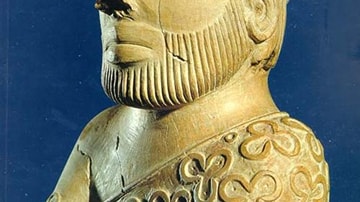
Priest-king from Mohenjo-daro
Priest-king statue, Indus Valley Civilization. The statue is 17.5 cm high and carved from steatite a.k.a. soapstone. It was found in Mohenjo-daro in 1927 CE. It is on display in the National Museum, Karachi, Pakistan...

Image
Priest Swearing Allegiance to the French State
A detail of a plate commemorating the 1790 Civil Constitution of the Clergy showing a priest swearing allegiance to the French state. The text translates as "I swear to maintain with all my power the Constitution"...
