
Search
Remove Ads
Advertisement
Search Results

Article
Liangzhu Culture Jade
Jade artifacts and icons are almost synonymous with the Chinese culture going back thousands of years. Jade (nephrite) was first worked into recognizable objects c. 6000 BCE during the period of the Houli Culture (c. 6500...

Article
Paper Money in Song China
Paper money was invented in China and became widely used by merchants during the Song dynasty (960-1279), principally as proof of cash holdings in state treasuries and for larger trade transactions. The greater security...

Image
A Chinese Servant Statue
A servant statue, Western Han Period (206 BCE – 9 CE). Cernuschi Museum, Paris, France.
Definition
Hyangga
Hyangga was a form poetical 'country song,' distinct from contemporary Chinese songs, which were written in the Silla and Goryeo kingdoms of ancient Korea between the 7th and 10th century CE. The indigenous songs cover such topics as...

Definition
Karakorum - Capital of the Mongol Empire
Karakorum (aka Qaraqorum, modern name: Harhorin) is located in the Orkhon Valley of central Mongolia and was the capital of the Mongol Empire from 1235 to 1263. Ogedei Khan (r. 1229-1241) ordered its construction...

Definition
Philosophy
The word philosophy comes from the Greek philo (love) and sophia (wisdom) and so is literally defined as “the love of wisdom”. More broadly understood, it is the study of the most basic and profound matters of human existence. Philosophical...

Definition
Emperor Taizu of Song
Emperor Taizu (960-976 CE), formerly known as Zhao Kuangyin, was the founder of the Song (aka Sung) dynasty which ruled China from 960 to 1279 CE. Taizu settled for a territorially smaller but more unified and prosperous China...
Definition
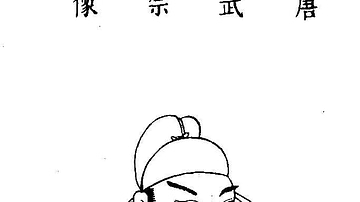
Emperor Wuzong of Tang
Wuzong of Tang (also Wu-Tsung, formerly Li Yan) reigned as emperor of China from 840 to 846 CE. He is best remembered today for his persecution of Buddhists, the worst such attack in all of China's history, and his early...

Definition
Mencius
Mencius (l. 372-289 BCE, also known as Mang-Tze or Mang-Tzu) was a Confucian philosopher during The Warring States Period in China (c. 481-221 BCE) and is considered the greatest after Confucius himself for his interpretation, formulation...

Definition
Burial
Burial of the dead is the act of placing the corpse of a deceased person in a tomb constructed for that purpose or in a grave dug into the earth. Archaeological excavations have revealed Neanderthal graves dating back 130,000 years, marking...
