
Search
Remove Ads
Advertisement
Search Results
Definition
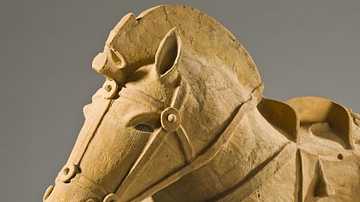
Haniwa
Haniwa are the unglazed terracotta rings, cylinders, and figures of people, animals, and houses which were deposited at Japanese tombs during the Kofun and Asuka Periods (c. 250-710 CE). The exact purpose of these offerings is not known...

Definition
Ancient Nara
Nara, located around 30 km south of modern Kyoto, was the capital of ancient Japan between 710 and 784 CE. It gave its name to the Nara Period (710-794 CE), although the name during the 8th century CE was Heijokyo. Modelled on the Chinese...

Definition
Heiankyo
Heiankyo (Kyoto), located in the centre of Honshu island, was the capital of Japan for over a thousand years and gave its name to one of the golden ages of Japanese history, the Heian Period (794-1185 CE). Built according to Chinese design...

Definition
Nara Period
The Nara Period (Nara Jidai) of ancient Japan (710-794 CE), so called because for most of that time the capital was located at Nara, then known as Heijokyo, was a short period of transition prior to the significant Heian Period. Despite the...

Definition
Prince Shotoku
Prince Shotoku (574-622 CE) ruled as regent of Japan from 594 to 622 CE and is one of the most celebrated figures in all of Japanese history. The prince was a great supporter of Chinese culture and Buddhism, spreading both during his reign...

Video
Introduction to the History of Ancient Japan
The History of Ancient Japan dates back to the fifteenth century BCE, and spans thousands of years until the beginning of the Medieval period in Japan. The Jōmon period was the first historical period of Japan, and the name Jōmon comes from...

Article
Ancient Korean & Japanese Relations
Ancient East Asia was dominated by the three states known today as China, Japan, and Korea. These kingdoms traded raw materials and high-quality manufactured goods, exchanged cultural ideas and practices, and fought each other in equal measure...

Interview
Interview: Korea-Japan Relations Through the Prism of Archaeology
Ancient East Asia was dominated by the three states known today as China, Japan, and Korea. The complex chain of successive kingdoms created a rich web of events that archaeologists have sometimes found difficult to disentangle; a situation...
Definition
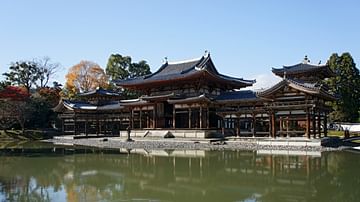
Heian Period
The Heian Period of Japanese history covers 794 to 1185 CE and saw a great flourishing in Japanese culture from literature to paintings. Government and its administration came to be dominated by the Fujiwara clan who eventually were challenged...
Definition
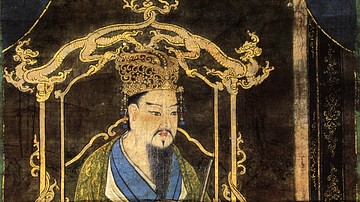
Emperor Kammu
Emperor Kammu (aka Kanmu) reigned in ancient Japan from 781 to 806 CE and is most noted for relocating the capital to Heiankyo (Kyoto) in 794 CE. Kammu was one of the most powerful emperors Japan had seen or would ever see, and his reign...
