
Search
Did you mean: Assyria?
Remove Ads
Advertisement
Search Results
Image
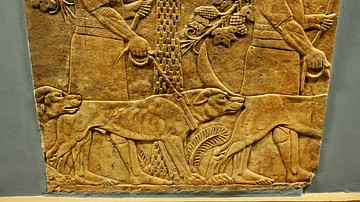
Assyrian Huntsmen with Hounds
Gypsum wall panel relief depicting huntsmen with hounds under palm trees. Panel 13, Room E of the North Palace at Nineveh (Kouyunjik), Northern Mesopotamia, modern-day Iraq. Neo-Assyrian period, reign of Ashurbanipal II, 645-635 BCE. The...
Image
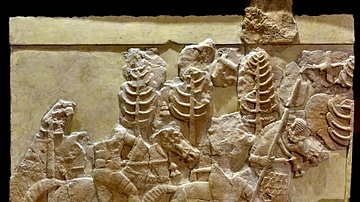
Assyrian Horsemen from Khorsabad
This relief is one of 3 large slabs depicting Assyrian men, with their horses, hunting in what appears to be a pine forest. From the Royal Palace of Sargon II at Khorsabad, in modern-day Nineveh Governorate, Iraq. Circa 710 BCE. On display...
Image
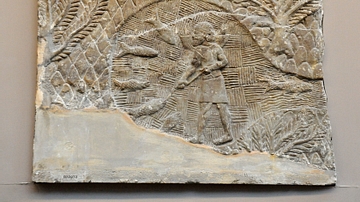
Assyrian Fisherman
This alabaster bas-relief depicts a man fishing in a mountain pool or pond. Neo-Assyrian Period, reign of Sennacherib, 700-692 BCE. From Room XLIV (LL) of the South-West Palace at Nineveh (Kouyunjik), Mesopotamia, modern-day Iraq. (British...
Image
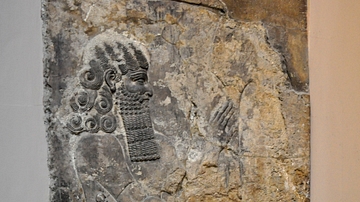
Assyrian Lahmu
This gypsum wall relief depicts a Lahmu; a human figure representing a minor deity. This Lahmu, holding a long and bladed lance guards gates. He has a striking long curly beard and hair. He is bare-footed and wears a short kilt with tassels...
Image
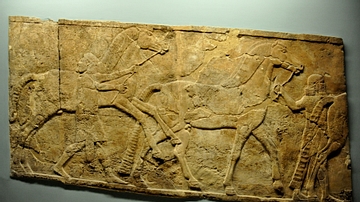
Assyrian Horses & Grooms
This gypsum wall panel relief depicts horses and grooms leaving Sennacherib's palace. Neo-Assyrian Period, reign of Sennacherib, 700-692 BCE. From Room L1 (north), the South-West Palace at Nineveh (Kouyunjik), Northern Mesopotamia, modern-day...
Image
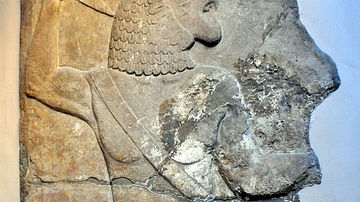
Assyrian Ugallu
This gypsum wall relief depicts a standing lion-headed man holding a dagger, looking to the right. This is "the Great Lion" or "Ugallu". Layard found it in two fragments, among the so-called "Gallery XLIX (O); the long gallery" at the South-West...
Image
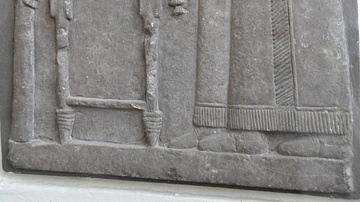
Assyrian Royal Horse Bridle
This gypsum wall panel depicts two female courtiers in front of a table, on which the royal horse bridle has been placed. Neo-Assyrian Period, reign of Ashurbanipal II, 660-650 BCE. From the North Palace at Nineveh, Mesopotamia, modern-day...
Image
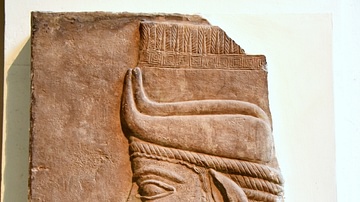
Assyrian Winged-bull Head
This fragment of a human-headed winged-bull, from Tiglath-pileser III's palace, is carved in low-relief like a wall panel. There is a marked contrast with the colossal figures in very high relief, of both earlier and later periods. Assyrian...

Image
Assyrian Door-sill
The cuneiform inscription gives the name and genealogy of Adad-nirari III (reigned 810-783 BCE) and was written in doorways of a palace built during his reign. Assyrian, 9th-8th centuries BCE. From Nimrud (ancient Kalhu, Mesopotamia), Upper...
Image
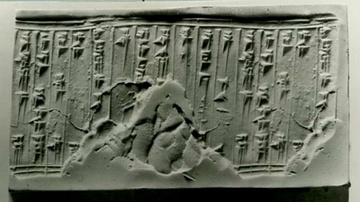
Assyrian Cylinder Seal Inscribed in Cuneiform Script
Though not necessarily an Israelite object, this object was uncovered around Samaria and dates to the Iron Age II (8th century BCE). It is 3.9 cm long (The Israel Museum, Jerusalem). The image is significant because it is evidence—among other...
