
Search
Remove Ads
Advertisement
Search Results

Article
Egyptian Mummies at the Montreal Museum of Fine Arts
The Montreal Museum of Fine Arts (Musée des beaux-arts de Montréal) is currently hosting the North American premiere of the exhibition Egyptian Mummies: Exploring Ancient Lives. Visitors can meet six mummies who lived in ancient Egypt from...

Collection
Ten Ancient Egyptian Stories
Stories in ancient Egypt were first written in the Early Dynastic Period (c. 6000-c. 3150 BCE) in the form of the Offering List and autobiography (or pseudo-autobiography) carved on one’s tomb, cataloging what gifts, and how many of each...
Article
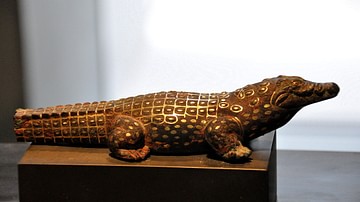
Pets in Ancient Egypt
Pets were very important to the ancient Egyptians and considered gifts from the gods to be cared for until their death when they were expected to be returned to the divine realm from which they had come. In life, pets were well cared for...
Article
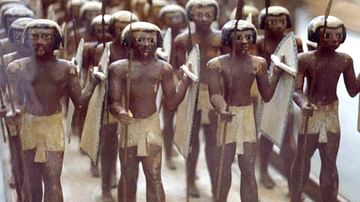
Weapons in Ancient Egypt
The ancient Egyptian military is often imagined in modern films and other media as a heavily armed and disciplined fighting force equipped with powerful weapons. This depiction, however, is only true of the Egyptian army of the New Kingdom...
Image
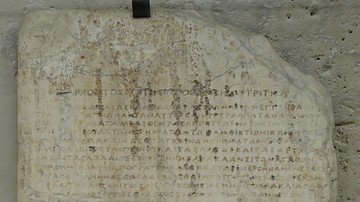
Amphictionic Law of Delphi
Amphictionic law of Delphi, Pentelic marble stele, from Aegina, 4th century BCE.
Louvre, Paris.
Image
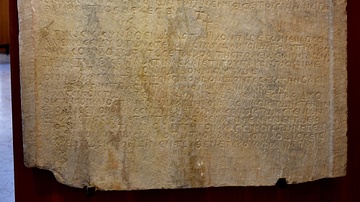
Law of Anastasius I Dicorus
Marble slab inscribed in Greek. This is the law of the Byzantine Emperor Anastasius I Dicorus (reigned 491-518 CE), regulating the passage through Dardanelles customs. Byzantine Period, 6th century CE. From Abydos, Çanakkale, in modern-day...

Image
Law of Separation of Churches and the State
Law of Separation of Churches and the State, 1905.
National Archives of France.
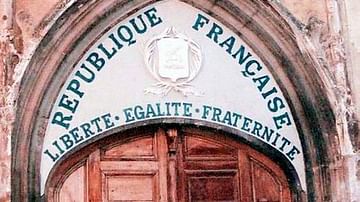
Image
Church of Saint Pancrace after 1905 Law of Separation
The entrance of the Church of Saint Pancrace in Aups after the 1905 Law of Separation of Church and State in France.
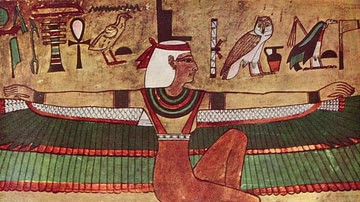
Image Gallery
A Gallery of Ancient Egyptian Gods & Goddesses
The gods and goddesses of ancient Egypt were an integral aspect of the peoples’ daily lives, inhabiting not only the temples thought to be their homes but the streams, lakes, plains, and trees of the land and, of course, the Nile River. The...

Image
Law Code Tablet of King Hammurabi from Nippur
This terracotta tablet is a smaller version of the original Code of Hammurabi to be used in schools and courts. The tablet was found at Nippur (modern Nuffar, Al-Qadisiyah Governorate, Iraq), southern Mesopotamia. Old Babylonian era, 1790...
