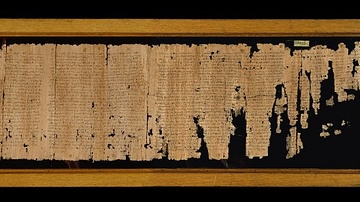
Ten Ancient Egyptian Stories

Joshua J. Mark
by
published on
bookmark_addbookmark_addedSave Collection

Stories in ancient Egypt were first written in the Early Dynastic Period (c. 6000-c. 3150 BCE) in the form of the Offering List and autobiography (or pseudo-autobiography) carved on one’s tomb, cataloging what gifts, and how many of each, were due the deceased and providing a brief summary of the person’s life and why they deserved remembrance.

The Offering List/Autobiography became more elaborate during the time of the Old Kingdom (c. 2613 – c. 2181 BCE), developing into the detailed autobiographies/biographies and tales of the king’s journey to the afterlife that are now known as the Pyramid Texts which inspired the later, and better-known, Egyptian Book of the Dead (The Book of Coming Forth by Day), a manual for the soul to navigate the afterlife and arrive at the paradise of the Field of Reeds, which reached its height of development in the New Kingdom (c. 1570-c. 1069 BCE).

Between the time of the early Offering Lists and the elaborate manuscripts of the Book of the Dead, ancient Egyptian literature developed in the form of autobiographies, biographies, essays, fiction, histories, hymns, myths, letters, personal essays, philosophical dialogues and admonitions, poetry, religious texts, and wisdom manuscripts. The literary merit of even court records has led modern-day Egyptologists to expand the definition of literature to include all the written works of ancient Egypt, not only the masterpieces of fiction from the Middle Kingdom (2040-1782 BCE), which is considered the apex of ancient Egyptian literature, inspired by the deities Thoth and Seshat.

The ten stories of this collection, however, are examples of Egyptian literature in the narrowest sense of the term as, even if some are based on actual events, they are all recognized as fiction/myth except for Letters to the Dead, included because it illustrates how the people of ancient Egypt understood the written word as powerful enough to transcend the boundary between the living and the dead.

The pieces of this collection date from the time of the Old Kingdom through the Late Period of Ancient Egypt (525-332 BCE), Letters to the Dead as the earliest and Tales of Prince Setna the latest.
Articles & Definitions

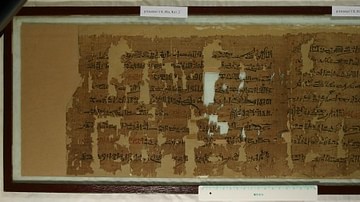
Letters to the Dead in Ancient Egypt
Article

Letters to the Dead in Ancient Egypt

The question of what happens after death has been addressed by religious beliefs and philosophies of every world...
no image
Article

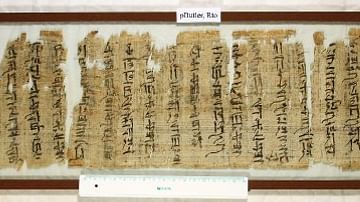
The Tale of the Shipwrecked Sailor: An Egyptian Epic

The Tale of The Ship-Wrecked Sailor is a text dated to the Middle Kingdom of Egypt (2040-1782 BCE...
The Satire of the Trades
Article

The Satire of the Trades

The literature of ancient Egypt is as rich and varied as any other culture. From the inscriptions of the Old Kingdom of...
The Eloquent Peasant & Egyptian Justice
Article

The Eloquent Peasant & Egyptian Justice

The Tale of the Eloquent Peasant is a literary work from the Middle Kingdom of Egypt (2040-1782 BCE) which...
The Tale of Sinuhe
Article

The Tale of Sinuhe

The Middle Kingdom of ancient Egypt (2000 BCE – 1700 BCE) saw the start of more formal writing which included religious scripts...
Stories from the Westcar Papyrus
Article

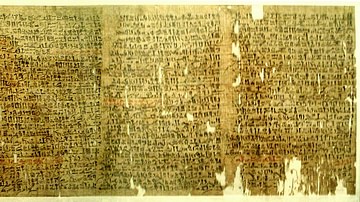
Stories from the Westcar Papyrus

The Westcar Papyrus, dated to the Second Intermediate Period of Egypt (1782 - c.1570 BCE), but most likely written...
A Ghost Story of Ancient Egypt
Article

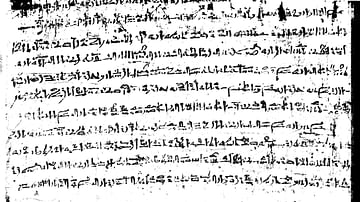
A Ghost Story of Ancient Egypt

The best-known ghost story from ancient Egypt is known, simply, as A Ghost Story but sometimes referenced as Khonsemhab...
Book of the Heavenly Cow
Definition

Book of the Heavenly Cow

The Book of the Heavenly Cow is an ancient Egyptian text dealing with the rebellion of humanity against the sun god Ra...
The Report of Wenamun: Text & Commentary
Article

The Report of Wenamun: Text & Commentary

The literature of the Middle Kingdom of Egypt (2040-1782 BCE) is justly famous as some of the best the culture...
The Tales of Prince Setna
Article

The Tales of Prince Setna

Among the most engaging and influential works from Egyptian literature are the stories in the cycle known as Setna I and...
Setna I: A Detailed Summary & Commentary
Article

Setna I: A Detailed Summary & Commentary

Setna I (also Setna Khaemaus and the Mummies) is a work of ancient Egyptian literature from the Ptolemaic...
Setna II: A Detailed Summary & Commentary
Article

Setna II: A Detailed Summary & Commentary

Setna II (also Setna Khaemaus and Si-Osire) is a work of ancient Egyptian literature from Roman Egypt (30...

Illustrations

Questions & Answers

When was ancient Egyptian literature written?

Ancient Egyptian literature was written between the Early Dynastic Period (c. 6000-c. 3150 BCE) and the Ptolemaic Period (323-30 BCE).

What was the greatest period of ancient Egyptian literature?

The greatest period of ancient Egyptian literature was the Middle Kingdom (2040-1782 BCE).

What are some of the most popular stories from ancient Egypt?

Popular stories from ancient Egypt include "The Tale of Sinuhe", "The Satire of the Trades", "The Eloquent Peasant", "The Tale of the Shipwrecked Sailor", "Stories from the Westcar Papyrus", and "The Tales of Prince Setna" among others.

When was the most fiction and poetry produced in ancient Egypt?

More ancient Egyptian fiction and poetry was composed in the time of the Middle Kingdom and the time of the New Kingdom than at any others.
Subscribe to this author

About the Author

Free for the World, Supported by You

World History Encyclopedia is a non-profit organization. Please support free history education for millions of learners worldwide for only $5 per month by becoming a member. Thank you!

World History Encyclopedia is a non-profit organization. Please support free history education for millions of learners worldwide for only $5 per month by becoming a member. Thank you!

Become a Member  

Support Us Remove Ads