
Search
Remove Ads
Advertisement
Search Results

Image
Law Code of King Ur-Nammu
This law code is considered the oldest known law code surviving today. Many terracotta tablets of this law code have been excavated at several archaeological sites in Mesopotamia. This tablet was found at Nippur (modern Nuffar, Al-Qadisiyah...

Video
Ancient Egyptian Religion: How were the Ancient Egyptian Gods and Goddesses Worshipped?
Ancient Egyptian Religion incorporated so many different aspects; mythology, spiritualism, science, magic, medicine psychology and herbology. With so many different facets, Ancient Egyptian religion was completely integrated into the lives...

Definition
Code of Hammurabi - The Most Influential Law Code of the Ancient World
The Code of Hammurabi was a set of 282 laws inscribed in stone by the Babylonian king Hammurabi (reign 1792-1750 BCE), who conquered and then ruled ancient Mesopotamia. Although his law code was not the first, it was the most clearly defined...

Article
Music & Dance in Ancient Egypt
Music and dance were highly valued in ancient Egyptian culture, but they were more important than is generally thought: they were integral to creation and communion with the gods and, further, were the human response to the gift of life and...

Article
Food & Drink in Ancient Egypt
Food and drink in ancient Egypt relied on barley and wheat, the primary crops cultivated along the Nile. The Egyptian diet was based on bread, beer, and vegetables. Meat was expensive and only rarely eaten. The majority of people ate fairly...
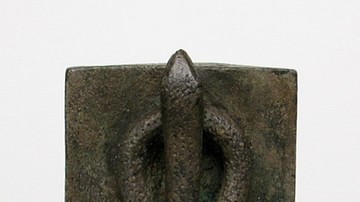
Image Gallery
Visual Guide to Ancient Egyptian Gods
This image gallery is a visual guide to the gods and goddesses of ancient Egypt. It includes depictions of many of Egypt's more iconic and widely worshipped deities, along with brief descriptions of their roles in Egyptian religion. Each...
Collection
Ancient Egyptian Goddesses
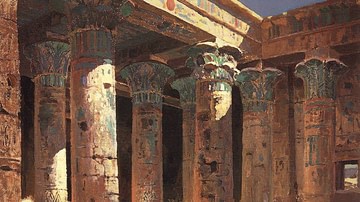
Egyptian goddesses are among the best-known and most popular from antiquity. Images of Isis, Hathor, Bastet, and Selket – among many others – are world-famous. The popularity of these female deities reflects the high status of women in ancient...

Definition
Seshat
Seshat (also given as Sefkhet-Abwy and Seshet) is the Egyptian goddess of the written word. Her name literally means "female scribe" and she is regularly depicted as a woman wearing a leopard skin draped over her robe with a headdress of...

Article
Cosmetics, Perfume, & Hygiene in Ancient Egypt
For the ancient Egyptians life was a celebration, and so, just as one would want to look one's best at any party, personal hygiene was an important cultural value. The Egyptians bathed daily, shaved their heads to prevent lice or other problems...
Image
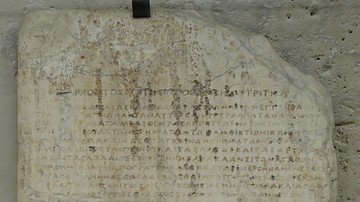
Amphictionic Law of Delphi
Amphictionic law of Delphi, Pentelic marble stele, from Aegina, 4th century BCE.
Louvre, Paris.
