
Search
Remove Ads
Advertisement
Search Results
Image
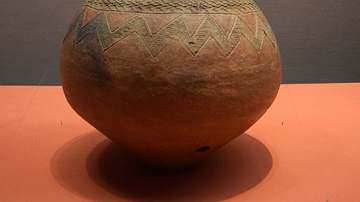
Yayoi Period Jar
A jar of the Yayoi Period, 1st-3rd century CE. From Kugahara, Ota-ku, Tokyo. Important Cultural Property. (Tokyo National Museum)
Image
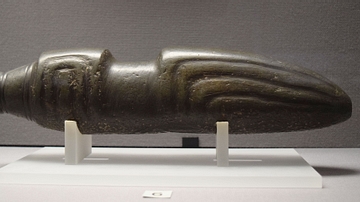
Jomon Period Stone Ritual Object
This stone ritual object comes from Japan and dates to the Jomon period, between 3000-400 BCE. (Tokyo National Museum)
Image
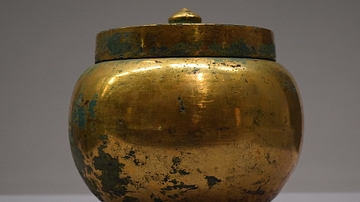
Cinerary Urn, Nara Period
A gilded cast bronze cinerary urn from the Nara Period (710-794 CE). From Kamori, Katsuragi-shi, Nara, Japan. Important Cultural Property (Tokyo National Museum)
Image
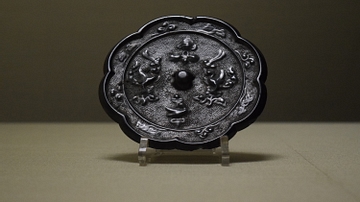
Nara Period Mirror
An eight-lobed cast bronze mirror with flowers and luan (a mythical bird) decoration. From Mount Tsuwado, Mukuno, Yamaga-machi, Kitsuki-shi, Oita, Japan. Nara Period, 8th century CE. Tokyo National Museum)
Image
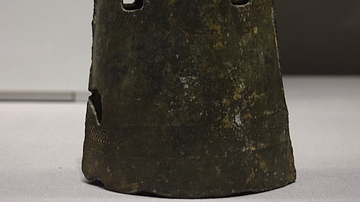
Dotaku Bell, Yayio Period
A bronze dotaku bell, Yayoi Period, 4th-2nd century BCE, Japan. (Tokyo National Museum)

Image
Model of Edo Castle during the Tokugawa Period
Scale model of the Honmaru and Ninomaru Palaces of Edo Castle, as they would have appeared during the late Tokugawa Shogunate. (Edo-Tokyo Museum, Japan)
Image
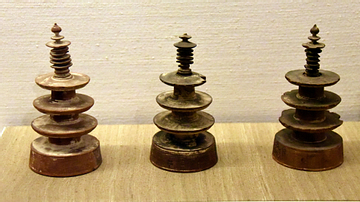
Nara Period Miniature Stupas
These are miniature stupas (hyakumanto). A stupa is a structure in a Buddhist temple that contains religious relics. Empress Shotoku (reigned 764-770 CE) ordered a million of these miniature wooden stupas to be made...

Image
Pottery Jar from Ninevite V Period
This pottery jar was handmade and painted. It is carinated and stemmed with four equidistant vertically perforated lugs on the carination. Ninevite 5 Period, 3000-2750 BCE. From Nineveh, Northern Mesopotamia, Iraq...

Image
Pottery Cup from Ninevite V Incised Period
This pottery cup was wheel-made and unpainted. It has a pointed base. Excavated by Robin Hamilton and Reginald Thompson in 1930-1931 season. Ninevite 5 period, 2750-2500 BCE. From Nineveh, northern Mesopotamia...

Image
Map of the Migration Period in Europe in the 4th-5th Century
The Migration Period in Europe (c. 4th–6th centuries CE) marks a prolonged era of movement, conflict, and political transformation rather than a single moment of collapse. Following the death...
