
Search
Remove Ads
Advertisement
Search Results
Image
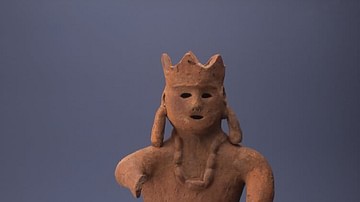
Haniwa, Kofun Period
Terracotta Haniwa figure from Kofun Period Japan.
Image
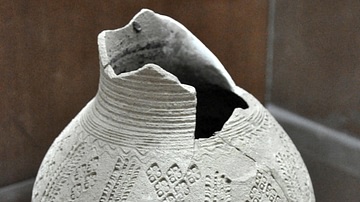
Pottery Jar from Hellenistic period
This partially broken jar dates back to the Hellenistic period, 323-30 BCE. From Mesopotamia, Iraq. (The Sulaimaniya Museum, Iraq).
Image
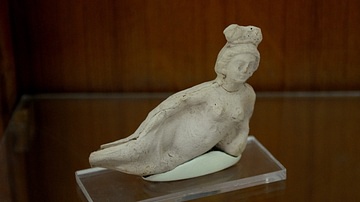
Woman from the Hellenistic Period
This terracotta statuette depicts a woman. The woman is recumbent and is naked and wears an elaborate headdress. She looks forward, as if she is talking to someone or looking at something. From Mesopotamia, Iraq...

Image
Knight from the Hellenistic Period
This is a fragment of a terracotta plaque, which depicts a knight riding a horse. He holds a sword with his right arm. From Mesopotamia, Iraq. The Hellenistic period, 334-139 BCE. (The Sulaymaniayh Museum, Iraq)
Image
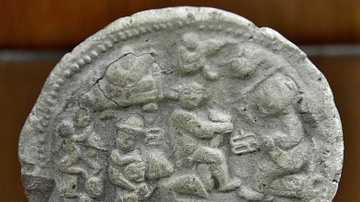
Pottery Plaque from the Hellenistic Period
This round pottery plaque depicts various human daily activities. In the middle, a man and a woman are having sex, and on the left, a standing woman holds a young child on her shoulders. Hellenistic Period...

Article
Ancient Korean & Japanese Relations
Ancient East Asia was dominated by the three states known today as China, Japan, and Korea. These kingdoms traded raw materials and high-quality manufactured goods, exchanged cultural ideas and practices, and fought...

Definition
New Kingdom of Egypt - The Age of Empire
The New Kingdom (circa 1570 to circa 1069 BCE) is the era in Egyptian history following the disunity of the Second Intermediate Period (circa 1782-1570 BCE) and preceding the dissolution of the central government...

Image
Map of the Assyria in the Middle Assyrian Period - Campaigns and Rival Powers in the Late Bronze Age
The Middle Assyrian period (c. 1365–1000 BCE) emerged from the shifting balance of power in the Late Bronze Age Near East. After earlier subordination to Mitanni...

Image
Samurai Armour, Sengoku Period
Samurai facemask and armour from the Sengoku period (Warring States Period), 1467-1568 CE. (Ann and Gabriel Barbier-Mueller Museum, Dallas, USA)

Image
Predynastic Period Vessel from Egypt
Terracotta vessel from the Predynastic Period in Egypt, c. 4500-3100 BCE. From the late Predynastic Period onward, the Egyptians used painted, incised, and polished pottery in life and as burial accessories for...
