
Search
Remove Ads
Advertisement
Search Results
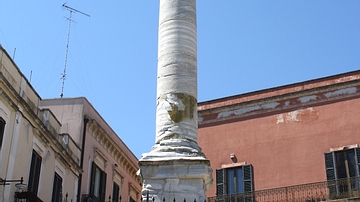
Image
End of the Appian Way Column Marker
A 19.2 m marble column which dates to the 1st century BCE and was part of an honorary monument in Brindisum. Traditionally, the column was thought to mark the end of the Roman road the via Appia (Appian Way) but...
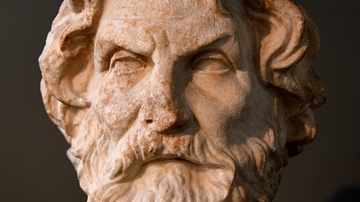
Image
Antisthenes, Cynic Philosopher
Antisthenes (450-370 BCE) was the founder of the Cynic school of philosophy. From near the Via Appia, Rome. Roman copy of a lost Greek original of the late 3rd or 2nd century BCE. (British Museum, London)

Article
Top 10 Roman Sites in Bulgaria
Roman Bulgaria occupied an important position in the heart of the Balkans, between the Black Sea, the Aegean, and Asia Minor. In the north, the Danube River formed a heavily defended military frontier, lined with auxiliary...

Article
The Fullers of Ancient Rome
The fullers of ancient Rome were launderers who washed the clothes of the city and also finished processing fabric later made into clothing, blankets, or other necessary items. They were looked down upon for their use...
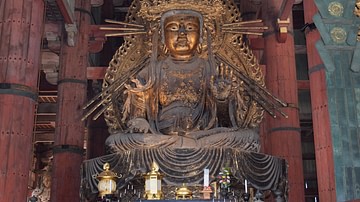
Article
Buddhism in Ancient Japan
Buddhism was introduced to ancient Japan via Korea in the 6th century CE with various sects following in subsequent centuries via China. It was readily accepted by both the elite and ordinary populace because it confirmed...

Article
The Transatlantic Zeppelins - A Golden Age of Air Travel
Transatlantic Zeppelins carried passengers in relative luxury between Germany and New York or Rio de Janeiro during the 1920s and 1930s. The airships Graf Zeppelin and Hindenburg crossed the Atlantic...

Article
The Hindenburg Disaster - End of the Transatlantic Airships
The Hindenburg disaster occurred on 6 May 1937 when the German Zeppelin airship LZ 129 Hindenburg attempted to land at Lakehurst, New Jersey, but burst into flames. The airship's gas cells were...

Article
Trade in Ancient Celtic Europe
Trade in raw materials and manufactured goods in ancient Celtic Europe was vibrant and far-reaching, particularly regarding the centre of the continent where there was a hub of well-established trade routes. As the...
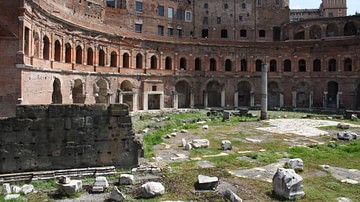
Article
Trajan's Market
Trajan's Market is the name given in the early 20th century CE to a complex of buildings in the imperial fora of Rome constructed in 107-110 CE during the reign of Trajan. The complex included a covered market, small shop fronts...

Article
A Visitor's Guide to Herculaneum
In the first part of our new travel series devoted to the archaeological sites around the Bay of Naples, we shared some hints and tips as to how you can best prepare for your self-guided tour of Pompeii. In this second...
