
Search
Remove Ads
Advertisement
Search Results
Image
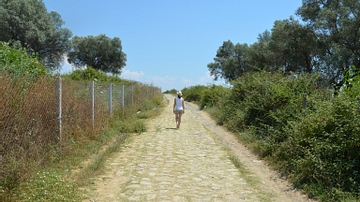
Walking the Via Egnatia
A 100 m-long portion of the Via Egnatia can be seen near the provincial town of Peqin, between Durrës and Elbasan (Albania). The pavement is about six metres wide with an Ottoman surface, a later repair of the earlier Byzantine and Roman...

Image
The Marble Arch on the Via Balbia
The Fileni Arch in Italian Libya was designed by architect Florestano Di Fausto in response to a request by the Italian Governor-General Italo Balbo (1896-1940). It was unveiled on 16 March 1937 in a lavish night ceremony attended by Benito...

Article
Roman Roads
The Romans built roads over ancient routes and created a huge number of new ones. Engineers were audacious in their plans to join one point to another in as direct a line as possible whatever the difficulties in geography and costs. Consequently...

Article
Death's Mansions: The Columbaria of Imperial Rome
A columbarium is an underground chamber, which the Romans used for preserving the ashes of the dead. During the 1st and 2nd centuries CE, hundreds of columbaria lined the consular highways leading out of Rome, although now only some two dozen...

Image
Epicurus Bust, British Museum
Epicurus (Epikouros), 342/1 - 271/0 BCE. He was the founder of the Epicurean school. From near the Via Appia, Rome. Roman copy of a lost Greek original of the late 3rd or 2nd century BCE. (The British Museum, London)

Definition
Roman Engineering
The Romans are known for their remarkable engineering feats, be they roads, bridges, tunnels, or their impressive aqueducts. Their constructions, many of them still standing, are a testament to their superior engineering skills and ingenuity...

Article
Was Cleopatra Beautiful?
The idea that Cleopatra VII (69-30 BCE), the famous last queen of ancient Egypt, owed her powerful position to her beauty persists. “The nose of Cleopatra: if it had been shorter, the whole face of the earth would have changed,” the French...

Article
A Visitor's Guide to Oplontis, Stabiae & Boscoreale
More than 2,000 years ago, extremely wealthy Romans lived on the sunny shores of the Bay of Naples at Pompeii and in opulent villas nearby, unconcerned about Mount Vesuvius in the distance. Julius Caesar (100-44 BCE), Augustus (r. 27 BCE...

Article
Visitor's Guide to Ancient Dion
Dion is located at the foot of Mount Olympus in the north of Greece, in what would have been ancient Macedon. It takes its name from the most important Macedonian sanctuary dedicated to Zeus ("Dios” meaning "of Zeus”). Legend claims this...
Article
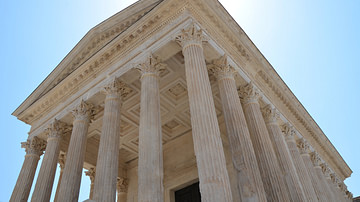
Top 10 Archaeological Sites in Provence
Provence has inherited a rich legacy from antiquity, boasting some of the best-preserved Roman ruins in Europe. In the 2nd century BCE, the Romans began their conquest of the region and called it “Provincia Romana,” giving us the region's...
