
Search
Remove Ads
Advertisement
Search Results

Definition
Charles II of England
Charles II of England (r. 1660-1685) was the king of Scotland (1649-1685) before the Restoration in 1660 also made him king of England and Ireland. Charles was a charming and easygoing monarch who took a keen interest in sports...
Definition
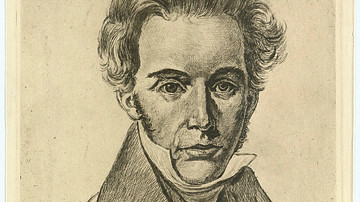
Søren Kierkegaard
Søren Kierkegaard (1813-1855) was a Danish philosopher and is considered to be the first existentialist, influencing such notable philosophers as Jean-Paul Sartre (1905-1980) and Martin Heidegger (1889-1976). His works are a...

Definition
Antinous
Antinous (l. c. 110-130 CE) was a youth of Bithynia who became the beloved of the Roman emperor Hadrian (l. 76-138 CE, r. 117-138 CE) from around the age of 13 until his death at nearly 20. His year of birth is unknown as are any details...

Definition
Mali Empire
The Mali Empire (1240-1645) of West Africa was founded by Sundiata Keita (r. 1230-1255) following his victory over the kingdom of Sosso (c. 1180-1235). Sundiata's centralised government, diplomacy and well-trained army permitted a...

Definition
Montesquieu
Montesquieu (1689-1757) was a French philosopher whose ideas in works like The Spirit of the Laws helped launch the Enlightenment movement in Europe. His ideas on the separation of powers, that is, between the executive, legislative...

Definition
Roger Williams
Roger Williams (l. 1603-1683 CE) was a Puritan separatist minister best known for his conflict with both the Plymouth Colony and Massachusetts Bay Colony in 1633-1635 CE, resulting in his banishment and founding of the colony of...

Definition
Tarascan Civilization
The Tarascan civilization (aka the Purépecha, after their language) dominated western Mexico and built an empire that would bring it into direct conflict with that other great Mesoamerican civilization of the Post-classic...

Definition
Ashoka the Great
Ashoka the Great (r. 268-232 BCE) was the third king of the Mauryan Empire (322-185 BCE) best known for his renunciation of war, development of the concept of dhamma (pious social conduct), and promotion of Buddhism as well as...
Definition
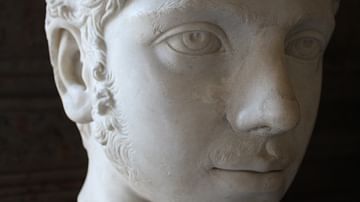
Elagabalus
Elgabalus was Roman emperor from 218 to 222 CE. Having failed to keep many of his promises to the army, Roman Emperor Macrinus (217 – 218 CE) was becoming increasingly unpopular, and it would only take a little lie from a young boy's...

Definition
Horemheb
Horemheb (reigned 1320-1292 BCE) was the last pharaoh of the 18th dynasty of Egypt. He is also known as Dejserkheprure and Horemhab. His name means, “Horus is in Festival” and he came from the lower classes of Egypt, worked himself...
