
Search
Remove Ads
Advertisement
Search Results

Image
Temple Mayor, Tenochtitlan
A model reconstruction of the Temple Mayor at the Aztec capital of Tenochtitlan. In use from the 14th to early 16th century CE, the huge pyramid was topped by two temples, one dedicated to Tlaloc, the god of rain (north...

Image
Coyolxauhqui
The 3.2m diameter stone disk which depicts the decapitated and dismembered corpse of Coyolxauhqui. According to Aztec mythology the war god Huitzilopochtli chopped up the goddess when she tried to lead a rebellion against the gods...

Image
Tizoc Stone
The Tizoc Stone which depicts on its flat upper surface a sun-disk and around its edge a continuous frieze showing the Aztec king Tizoc and other warriors capturing deities of conquered peoples. 15th century CE. (National Museum of...

Image
Aztec New Fire Ceremony
The lighting of fires during the Aztec New Fire Ceremony of 1507, a ritual held every 52 years to ensure the continuation of the Sun. The priests carry fire bundles and wear turquoise masks in imitation of the fire god Xiuhtecuhtli...
Image
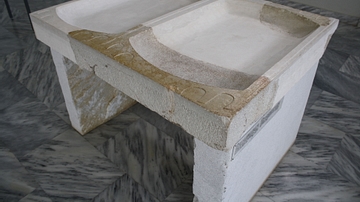
Sacrificial Table, Nemea
Restored stone table on which were placed the sacrificial offerings to the Gods in Greek religious practice. One tray was for the 'Epidaurian Gods' (Apollo & Esklepios), the other for Zeus. (c. 300 BCE). Nemea Archaeological...

Video
The Sun Stone (The Calendar Stone), Aztec
The Sun Stone (or The Calendar Stone), Aztec, reign of Moctezuma II (1502-20), discovered in 1790 at the southeastern edge of the Plaza Mayor (Zocalo) in Mexico City, stone (unfinished), 358 cm diameter...

Video
Coatlicue, c. 1500
Coatlicue, c. 1500, Mexica (Aztec), found on the SE edge of the Plaza mayor/Zocalo in Mexico City, basalt, 257 cm high (National Museum of Anthropology, Mexico City) A conversation with Dr. Lauren Kilroy-Ewbank and Dr. Steven...

Curriculum Collection
AP World History Unit 3 - Land-Based Empires (c. 1450–1750)
Between 1450 and 1750 CE, rulers across Eurasia built land empires on a scale not seen before, using gunpowder weaponry to conquer and intricate bureaucracies to govern. The Ottomans took Constantinople...

Video
Coyolxauhqui Monolith, c. 1500
Coyolxauhqui Monolith (Aztec), c. 1500, volcanic stone, found Templo Mayor, Tenochtitlan, excavated 1978 (Museo del Templo Mayor, Mexico City)
Speakers: Dr. Beth Harris and Dr. Lauren Kilroy-Ewbank
Collection
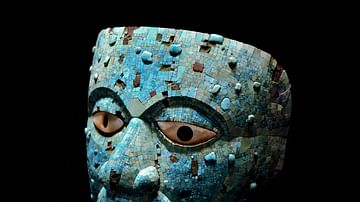
15 Aztec Gods
The Aztecs of northern Mesoamerica (c. 1345 and 1521 CE) worshipped some of the weirdest, most fantastic and downright scary gods seen anywhere in history. The Aztec civilization and the empire it created revolved around winning...
