
Search
Did you mean: Roman Art?
Remove Ads
Advertisement
Search Results

Video
Flaroh Illustration, Creator of Ancient Art
Join World History Encyclopedia as they chat with Flora of Flaroh Illustration who creates art based on the ancient world, artefacts and myths. Flora tells us all about her process in creating her pieces...

Image Gallery
A Gallery of Ancient Egyptian Art
Ancient Egyptian art was created to serve a practical purpose, not for its own sake, and so every piece had a specific function. At the same time, these works were crafted in accordance with the cultural value of...

Image Gallery
A Gallery of Chinese Art & Architecture
Chinese culture developed from small communities such as Banpo Village (c. 4500 BCE) through the early Xia Dynasty (c. 2070-1600 BCE) and the great dynastic periods that followed after, creating some of the...

Image
Art Nouveau Portuguese Ceramic Tile
The Art Nouveau period (c. 1890-1910 CE) saw the facades of Portuguese houses and buildings decorated with the flowing, curved lines of flowers, plants, vines, leaves, insects and animals that were typical of the...
Definition
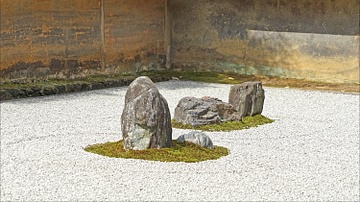
Ryoanji
Ryoanji (Ryōan-ji) is a Zen Buddhist temple in Kyoto, Japan which is today most famous for its Zen rock garden with its enigmatic arrangement of stones. Founded in the 15th century CE, the temple is one of the most visited tourist spots...

Collection
The Art & Culture of Ancient Greece
The ancient Greeks were masters at picking up ideas from other cultures, mixing these with their own innovations and producing unique contributions to world culture. Greek sculptors adored the human form, painters...

Image
Ephesus terrace houses: Mosaics and Art
The terrace homes in Ephesus give a glimpse of how the wealthy lived during the Roman period The oldest building dates back into the 1C BCE and continued in use as a residence until the 7C CE.

Definition
Paul Cézanne
Paul Cézanne (1839-1906) was a French post-impressionist artist. Although he struggled for recognition in his own lifetime and often lacked confidence in his work, the artist's unique style, use of light and colour, and his interest...

Interview
Interview: Pre-Raphaelites: Modern Renaissance
Pre-Raphaelites: Modern Renaissance marks the first multidisciplinary exhibition in Italy to examine the profound impact of Italian Renaissance art on the Pre-Raphaelite movement, which flourished in Victorian...
Definition
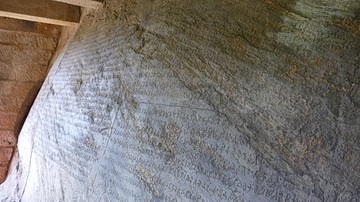
The Edicts of Ashoka the Great
The Edicts of Ashoka are 33 inscriptions engraved on pillars, large stones, and cave walls by Ashoka the Great (r. 268-232 BCE), the third king of the Mauryan Empire (322-185 BCE) of India. One set, the so-called Major...
