
Search
Remove Ads
Advertisement
Search Results

Article
Causes of the Hundred Years' War
The Hundred Years' War (1337-1453) was an intermittent conflict fought between England and France that started when king Edward III of England (r. 1327-1377) squabbled with Philip VI of France (r. 1328-1350) over...

Article
Zwingli's Persecution of the Anabaptists
Huldrych Zwingli (l. 1484-1531) broke with the Church in 1522 and defended his beliefs at the First Disputation in 1523, encouraging many people in Zürich to embrace his teachings. Among his followers was a...
Article
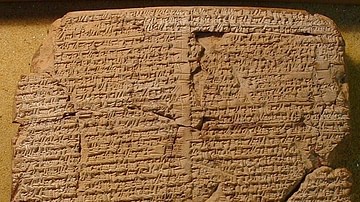
Ancient Mesopotamian Ghost Spell - Keeping the Dead Where They Belong
Medicine in ancient Mesopotamia was based on the belief that illness was caused by supernatural agencies and, although medicines were given and injuries treated, magical spells and incantations...

Article
Hygieia, the Goddess of Health
Modern medicine has its origin in the ancient world. The oldest civilizations used magic and herbs to cure their sick people, but they also used religion to free them from harm and to protect their health. The medical...

Curriculum Collection
AP World History Unit 2 - Networks of Exchange (c. 1200-1450)
Between 1200 and 1450, the trade networks linking Afro-Eurasia intensified and reached further than ever before. The Silk Roads carried silk, porcelain, and paper westward across Central Asia...

Image
Exploring a Battlefield
Depiction of a plague-infested battlefield during the Hundred Years War as depicted in the video game A Plague Tale: Innocence.

Image
Amicia and Hugo de Rune
The fictional characters Amicia de Rune and Hugo de Rune from the video game A Plague Tale: Innocence, set in Medieval France during the plague.

Curriculum Collection
AP World History Unit 1 - The Global Tapestry (c. 1200-1450)
Between 1200 and 1450 CE, no single power dominated the world. Instead, a number of powerful civilizations developed in parallel: the Song Dynasty in China, ruled after 1279 by the Mongols; the...
Image
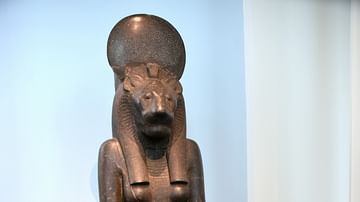
Statue of a Sitting Figure of Goddess Sekhmet
Sekhmet was a lion goddess, whose name means "the mighty one", and she personified the aggressive aspects of other goddesses. Sekhmet was a daughter of the sun god Ra. She usually wears the sun-disc on...

Collection
England's Peasant Uprising of 1381
In this collection of resources, we examine the Peasants' Revolt in England in 1381, a popular uprising that sought dramatic social changes such as the removal of the poll tax, an end to the cap on labour wages...
