
Search
Remove Ads
Advertisement
Search Results
Article
Middle Eastern Power Shifts & the Trade of Pepper from East to West
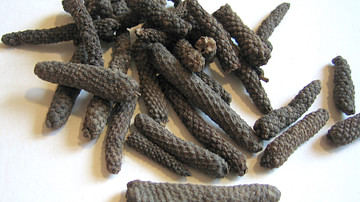
Pepper has long been the king of spices and for almost 2,000 years dominated world trade. Originating in India, it was known in Greece by the 4th century BCE and was an integral part of...

Image
Map of the North Sea Empire of Cnut the Great, 1016 - 1035 - England, Denmark, and Norway under a Viking Dynasty
The so-called North Sea Empire refers to the personal union created by Cnut the Great (reign in England 1016–1035; Denmark 1018–1035; Norway 1028–1035...

Article
The Phoenicians - Master Mariners
Driven by their desire for trade and the acquisition of such commodities as silver from Spain, gold from Africa, and tin from the Scilly Isles, the Phoenicians sailed far and wide, even beyond the Mediterranean's...

Image
Map of North Africa and the Western Mediterranean c. 1065 - Power Shifts in the Post-Caliphate Maghreb
Around 1065, the geopolitical landscape of North Africa and the western Mediterranean was marked by fragmentation, migration, and the rise of new regional powers...

Article
Caesarea Maritima's Role in the Roman Empire
Caesarea Maritima, the city Herod the Great (r. 37-4 BCE) built for Rome on the southeastern coast of the Mediterranean served as the Roman Empire's powerbase of operations both commercially and militarily...

Image
Map of the Coral Sea
A map of the Coral Sea in the south-west Pacific Ocean.

Article
Scythian Territorial Expanse
With 7600 perimeter miles (12,231 km), the Scythians roamed and ruled over an astonishing 1.5 million mi² (2.4 million km²) of territory between the 7th and 3rd centuries BCE. Although building an empire was never in...
Image
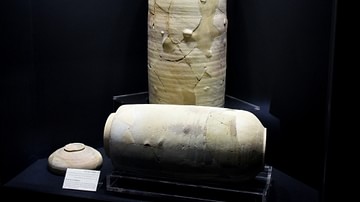
Dead Sea Scrolls Jars
Dead Sea Scrolls jars from Qumran (Khirbet Qumran or Wadi Qumran), West Bank of the Jordan River, near the north part of the Dead Sea, modern-day State of Israel. The Dead Sea Scrolls, or Qumran Caves Scrolls, are parchment...

Image
Map of Eastern Mediterranean in 1450 CE
Geopolitical climate in the Eastern Mediterranean before the conquest of Constantinople in 1453 CE.

Image
476: The New Political Face of the Western Mediterranean
The map show the political situation within the western regions of the Mediterranean after the deposition of the last Western emperor, Romolus Augustulus, by Odoacer, the commander of the Italian...
