
Search
Did you mean: Justinian I?
Search Results

Definition
Constantine IV
Constantine IV ruled as emperor of the Byzantine empire from 668 to 685 CE. His reign is best remembered today for the five-year Arab siege of Constantinople from 674 CE, which the Byzantines resisted thanks to their strong fortifications...
Article
Theodora: A True Heroine?
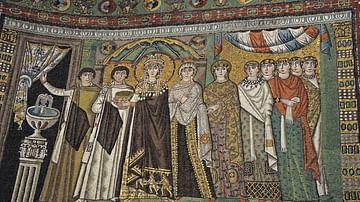
Was Theodora I, the wife of Emperor Justinian of Byzantium (reigned 527 - 565 CE), a heroine? The historian Treadgold calls her a protectress of women, as she used her influence to help them gain rights. She is also seen in popular legend...
Definition
Anastasios I
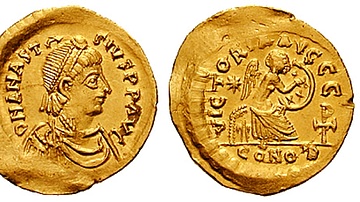
Anastasios I ruled the Byzantine empire from 491 to 518 CE. Although his tax and monetary reforms were both popular and successful, the emperor could not repair the damaging split in the Christian Church created by his predecessors. He faced...
Definition
Bayan I
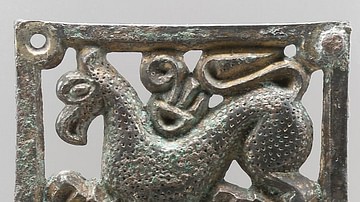
Bayan I (reigned 562/565-602 CE) was a king of the Avars, a confederation of heterogeneous people who migrated from the region of Mongolia, north of China, in 552 CE and came in contact with the Eastern Roman Empire c. 557 CE. Bayan I is...
Definition
Hagia Sophia
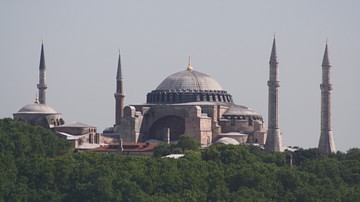
Hagia Sophia in Istanbul, constructed 532-537, continues to be revered as one of the most important structures in the world. Hagia Sophia (Greek Ἁγία Σοφία, for 'Holy Wisdom') was designed to be the major basilica of the Byzantine Empire...

Definition
Byzantine Government
The government of the Byzantine Empire was headed and dominated by the emperor, but there were many other important officials who assisted in operating the finances, judiciary, military, and bureaucracy of a huge territory. Without elections...

Article
Twelve Famous Women of the Middle Ages
Women in the Middle Ages were frequently characterized as second-class citizens by the Church and the patriarchal aristocracy. Women's status was somewhat elevated in the High and Late Middle Ages by the cult of the Virgin Mary and courtly...

Article
Capitals of the Roman Empire: Constantinople & Rome
Constantinople at first had much in common with the temporary capitals of the 2nd and 3rd century CE and the tetrarchic capitals. It was an existing city of medium size, well located on the road network, and unlike most of them, it was also...
Interview
Interview: Barry Strauss on Ten Caesars
Dr. Barry Strauss' Ten Caesars: Roman Emperors from Augustus to Constantine tells the epic story of the Roman Empire from its rise to its eastern reinvention, from Augustus, who founded the empire, to Constantine, who made it Christian and...

Article
Trade in the Byzantine Empire
Trade and commerce were essential components of the success and expansion of the Byzantine Empire. Trade was carried out by ship over vast distances, although for safety, most sailing vessels were restricted to the better weather conditions...
