
Search
Remove Ads
Advertisement
Search Results

Definition
Parthian Religion
Parthian religion might be best described with two words: inclusive and evolving. As Parthia's empire held within it a variety of cultures, the Parthians wisely left each to their own beliefs and traditions, like the Seleucid...

Definition
Urartu Religion
The religion of the Urartu civilization, which flourished principally in ancient Armenia from the 9th to 6th century BCE, was a unique mix of indigenous, Hurrian and Mesopotamian gods and symbolism. The pantheon was headed by...

Article
Religion in Colonial America
Religion in Colonial America was dominated by Christianity although Judaism was practiced in small communities after 1654. Christian denominations included Anglicans, Baptists, Catholics, Congregationalists, German Pietists...
Definition
Scythian Religion
Scythian religion appears to be an amalgam of belief in a pantheon of gods grafted to more ancient animal reverence and shamanistic practice. According to their burial finds, the Scythians appear to have had a deep affinity with...
Interview
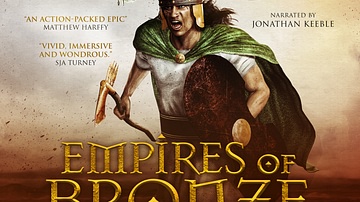
Author Interview: Son of Ishtar by Gordon Doherty
Today we sit down with Gordon Doherty to discuss his new book Empires of Bronze: Son of Ishtar. Based in the dark and cold north (i.e. Scotland), Gordon has written extensively on ancient Greece and...

Article
Sacred Sites & Rituals in the Ancient Celtic Religion
In the religion of the ancient Celts who lived in Iron Age Europe from 700 BCE to 400 CE, certain natural sites like springs, river sources, and groves were held as sacred. These places, as well as...

Definition
Ramesses II
Ramesses II (r. 1279-1213 BCE, alternative spellings: Ramses, Rameses) was known to the Egyptians as Userma'atre'setepenre, which means 'Keeper of Harmony and Balance, Strong in Right, Elect of Ra'. He is also known also as Ozymandias...

Article
The Battle of Kadesh & the First Peace Treaty
Ramesses II (The Great, 1279-1213 BCE) ruled Egypt for 67 years and, today, the Egyptian landscape still bears testimony to the prosperity of his reign in the many temples and monuments he had built in...

Article
Maya Religion: The Light That Came From Beside The Sea
The Mayan religious text, the Popol Vuh (known by many names, among them, The Light That Came From Beside The Sea) is the Quiche Maya story of creation translated into Spanish in the early 18th century...

Article
Religion & Superstition in Colonial America
Religion and superstition went hand in hand in Colonial America, and one’s belief in the first confirmed the validity of the second. The colonists' worldview was completely informed by religion and so everything...
